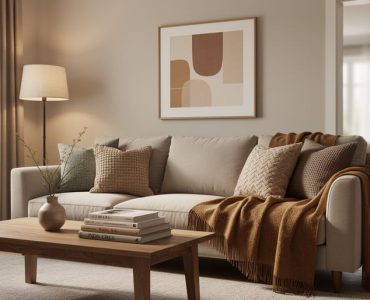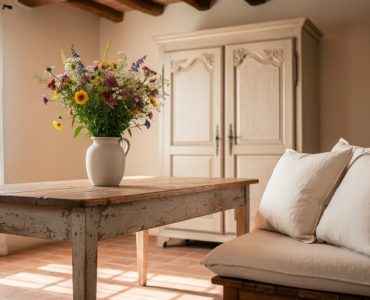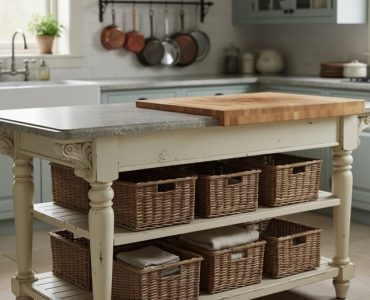
French country design brings together 20 distinct core elements that transform ordinary rooms into spaces filled with the rustic elegance of provincial France. From weathered limestone and hand-hewn beams to soft linen drapes and heirloom pottery, each component works together to create that signature blend of relaxed sophistication you see in French farmhouses and countryside estates.
Understanding these elements means more than just copying a look from a magazine. The authentic French country aesthetic emerged from centuries of rural living in regions like Provence, Normandy, and Brittany, where homes were built from local materials and furnished with pieces that balanced beauty with everyday function. A genuine French country room feels lived-in and welcoming, never precious or overly decorated.
This guide breaks down all 20 elements you need to know, explaining not just what they are but how to recognize quality versions and incorporate them into your own home. Whether you’re planning a complete renovation or simply want to add French country touches to a single room, you’ll learn exactly which materials, colors, furnishings, and decorative details create this timeless style.
How We Chose These Essential Elements
Selecting twenty elements from the rich tradition of French country design required more than personal preference. We focused on four key criteria to ensure each element genuinely serves your design goals.
Authenticity to French provincial origins came first. Every element traces back to real French farmhouses and countryside homes, not Hollywood interpretations. We consulted with interior designers who’ve sourced antiques in Provence and studied historical French interiors to verify each choice reflects true provincial heritage.
Practicality in modern homes mattered equally. Beautiful elements that demand museum-level maintenance didn’t make the cut. Each selection works in actual lived-in spaces where families cook, gather, and relax daily.
Versatility across rooms expanded their value. The best French country elements transition naturally from kitchen to bedroom to living area, giving you flexibility as your needs evolve.
Finally, we considered influence on the overall aesthetic. Some elements, like distressed wood or soft color palettes, anchor the entire style. Others add finishing touches. We balanced both types to give you a complete framework rather than a collection of accessories.
This approach ensures you’re building authentic French country character, not assembling a themed stage set.
1. Distressed Wood Furniture, Weathered by Time
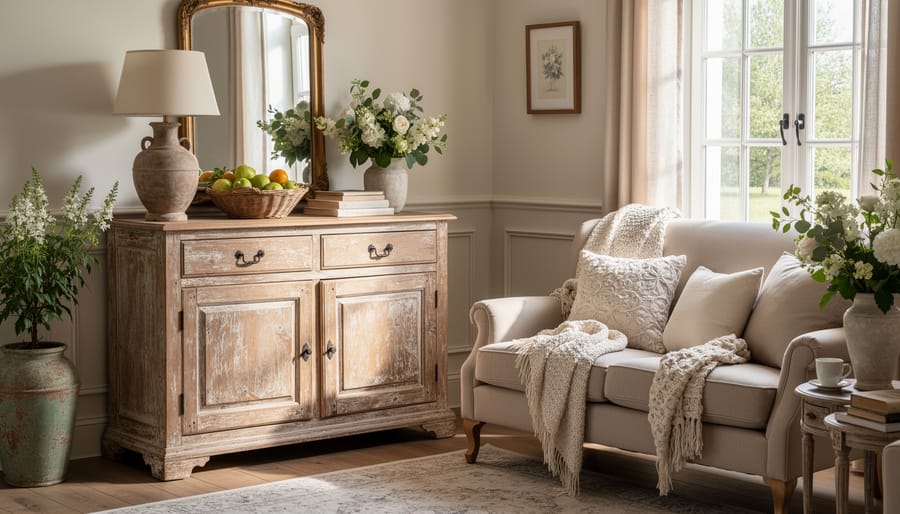
Distressed wood furniture forms the backbone of French country interiors, carrying the gentle marks of decades, sometimes centuries, of daily use. These pieces tell stories through their imperfections: worn edges where hands have gripped, faded paint revealing layers of color beneath, and soft gouges that map a family’s history.
Authentic French armoires, with their carved panels and iron hardware, anchor bedrooms and living spaces with commanding presence. Farm tables in oak or fruitwood bear the character of countless meals, their surfaces smoothed by use rather than sandpaper. Ladder-back chairs with rush seats show the natural aging that comes from real life, not factory distressing techniques.
The beauty lies in genuine patina, the subtle sheen that develops as wood oxidizes and absorbs oils over time. This can’t be replicated quickly. Look for pieces with consistent wear patterns in logical places: table edges, drawer fronts, chair rungs. Avoid furniture that appears uniformly distressed, which signals artificial aging.
Whether you inherit a true antique or find a well-made reproduction, these weathered wood pieces bring warmth and soul that smooth, pristine furniture simply cannot match.
2. Soft, Muted Color Palettes Inspired by Provence
The color palette of French country design takes its cues directly from the Provençal landscape, think lavender fields stretching toward distant hills, weathered shutters faded by Mediterranean sun, and limestone farmhouses glowing warm at dusk. These aren’t bold, saturated hues but soft, layered tones that feel lived-in from the start.
Gentle lavender appears in textiles and accent walls, capturing the region’s signature crop without overwhelming a room. Warm creams and ivories serve as foundational neutrals, mimicking aged plaster and natural linen. Sage green brings the olive groves and herb gardens indoors, working beautifully on cabinetry or upholstery. Sun-bleached blues, imagine shutters exposed to decades of bright light, add calm without the crispness of coastal navy.
The key is choosing colors that look like they’ve aged gracefully rather than ones that shout newness. French country palettes rely on subtlety and natural variation, often incorporating several related tones in one space to build depth. Avoid stark whites or jewel tones; instead, look for paint chips and fabrics that feel slightly dusty or sun-washed, as if they’ve already lived a quiet, beautiful life in the countryside.
3. Natural Stone Accents for Grounded Beauty
Natural stone anchors French country interiors with the same weathered authenticity found in centuries-old Provençal farmhouses. Limestone, with its soft cream and taupe tones, works beautifully on kitchen countertops and bathroom vanities, developing a gentle patina that only improves with age. Its porous surface tells the story of daily use rather than fighting against it.
Fieldstone brings irregular, organic shapes to fireplace surrounds and accent walls. These rounded stones, gathered from fields and riverbeds, create textured surfaces that catch light differently throughout the day. Each stone’s unique coloring adds visual interest without overwhelming a space.
Flagstone works particularly well for entryway floors and covered patios, bridging indoor and outdoor living. Its flat, uneven surface provides slip resistance while maintaining rustic charm. The slight variations in thickness and the wide grout lines emphasize handcrafted character over polished perfection.
Unlike uniform manufactured materials, natural stone accepts chips and stains as part of its evolving beauty. This resilience makes it ideal for high-traffic areas where imperfection becomes part of the design story rather than a flaw to hide.
4. Linen and Cotton Textiles in Everyday Spaces
Natural fabrics form the soft foundation of French country interiors, where linen and cotton appear not as formal decorative statements but as everyday necessities elevated to art. These breathable textiles embody the practical elegance central to provincial French living, beautiful because they’re useful, cherished because they age gracefully.
Linen curtains filter sunlight without blocking it completely, creating that characteristic diffused glow in French country rooms. Their slight texture and natural wrinkles signal relaxed authenticity rather than stiff formality. Cotton slipcovers protect upholstery while allowing furniture to be refreshed seasonally, often in muted stripes, checks, or solid creams that complement rather than compete with the room’s other elements.
Table linens deserve particular attention. A simple linen tablecloth, perhaps with a subtle herringbone weave or hand-stitched edge, transforms daily meals into occasions worth savoring. Cotton napkins in classic red-and-white checks or Provençal prints add color without fussiness.
The beauty lies in layering these textiles throughout your home, throw pillows in natural linen, lightweight cotton blankets draped over chairs, tea towels displayed on open shelving. Choose pre-washed fabrics that feel soft from the start, and embrace the wrinkles. In French country design, perfectly pressed perfection matters far less than touchable, lived-in comfort.
5. Wrought Iron Details with Artisan Charm
Wrought iron brings the unmistakable touch of French artisan tradition to country interiors. Unlike mass-produced metal finishes, hand-forged iron displays subtle irregularities, hammer marks, slight variations in scrollwork, and a hand-rubbed patina that speaks to centuries-old blacksmithing techniques still practiced in rural France.
You’ll find wrought iron defining key focal points: overhead chandeliers with graceful candelabra arms, curtain rods topped with decorative finials, and furniture legs or stretchers that anchor tables and chairs. Pot racks suspended above kitchen islands, wall-mounted sconces flanking mirrors, and decorative hinges on cabinet doors all carry this handcrafted quality.
The beauty lies in the metal’s imperfections. Look for pieces with a matte black or aged bronze finish rather than polished chrome. Authentic wrought iron feels substantial in weight, with welds and joins that show the maker’s hand.
This element pairs beautifully with softer materials, iron chandeliers against whitewashed plaster ceilings, metal bed frames dressed in linen bedding, or iron bakers’ racks displaying earthenware pottery. The contrast creates visual interest while reinforcing the French country theme of blending rustic utility with understated elegance.
6. Toile de Jouy Patterns Telling Stories
Toile de Jouy originated in 18th-century France as single-color printed cotton depicting elaborate pastoral scenes, shepherds tending flocks, romantic garden parties, mythological vignettes. These narrative fabrics were produced in Jouy-en-Josas near Versailles, where artisans perfected copper-plate printing techniques that allowed intricate storytelling across yards of fabric.
The classic colorways remain navy, red, or black printed on cream backgrounds, though softer blues and greens suit modern French country interiors. What makes toile distinctive is its visual storytelling, each repeat contains complete scenes you can study up close, transforming functional fabric into conversation-starting art.
In French country homes, toile appears as upholstery on occasional chairs and headboards, wallpaper in bedrooms or powder rooms, and accents like throw pillows and lampshades. The key is restraint: one toile element per room prevents visual overwhelm. Pair it with solid linens and simple stripes to let the pattern shine without competing.
Authentic toile maintains fine detail and balanced composition. Inspect closely, quality printing shows crisp lines and consistent color saturation, while cheap reproductions blur details and flatten the dimensional quality that gives traditional toile its timeless appeal.
7. Terracotta Tiles and Earthy Flooring
Terracotta tiles carry the sun-baked warmth of Provence into your home, their rich clay tones ranging from soft peachy-orange to deep russet. These handcrafted tiles, often irregular in shape and texture, bring an earthy, grounded quality that anchors spaces with rustic authenticity. In a French country kitchen terracotta flooring creates instant Mediterranean character, while its natural durability withstands heavy foot traffic and kitchen spills. The slightly porous surface develops a gentle patina over time, deepening the sense of age and history.
Consider extending terracotta into entryways, mudrooms, or sunrooms where its warmth contrasts beautifully with whitewashed walls and natural wood. For kitchen island ideas terracotta underfoot defines the cooking zone while maintaining visual flow. Pair these tiles with limestone or wide-plank wood in adjacent rooms to create subtle transitions that feel organic rather than abrupt. The uneven edges and color variations aren’t flaws, they’re proof of artisan craftsmanship that gives French country homes their lived-in soul.
8. Open Shelving for Display and Function
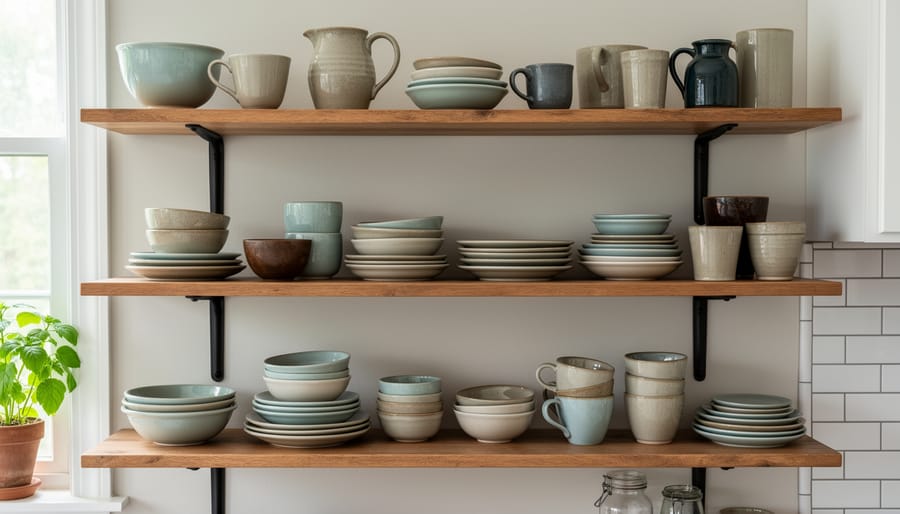
Open shelving transforms functional storage into an opportunity for artful display, and it’s a cornerstone of French country kitchens and dining rooms. Unlike closed cabinetry that hides everything away, these exposed shelves celebrate the beauty of everyday objects, handmade pottery, vintage glassware, copper pots, and well-loved serving pieces become part of the room’s visual story.
The French country approach favors simple wooden planks with visible grain or wrought iron brackets that feel collected over time rather than perfectly matched. You’ll often see thick reclaimed boards mounted against whitewashed walls, their weight supported by sturdy metal supports with hand-forged details.
What makes this element work is the careful balance between utility and aesthetics. Stock your shelves with items you actually use, a stack of mismatched bowls, a row of glass preserving jars, ceramic pitchers holding wooden spoons. This creates an organic, lived-in quality that looks effortless but requires thoughtful curation.
The key is leaving breathing room. Resist the urge to fill every inch. Space between objects lets each piece stand out and prevents the display from feeling cluttered or overwhelming.
9. Farmhouse Sinks in Apron-Front Style
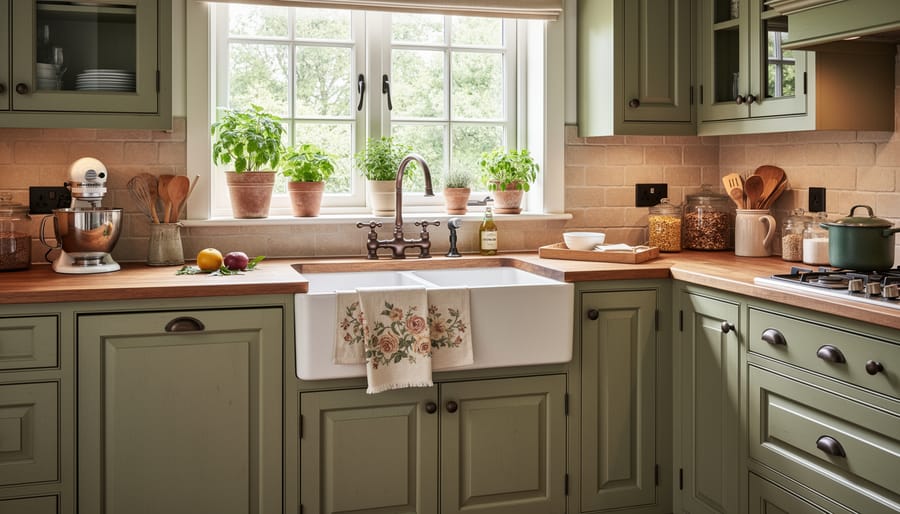
A farmhouse sink commands attention the moment you step into a French country kitchen. These deep, wide basins extend beyond the counter edge, exposing their front panel, what designers call an apron front, in stark contrast to the undermount sinks tucked beneath granite in modern homes. The oversized bowl easily accommodates stockpots, sheet pans, and oversized serving platters, proving that form follows function in authentic French design.
White ceramic or fireclay remains the traditional choice, though you’ll occasionally spot pale cream or soft blue versions in Provençal homes. The material’s durability matters, these sinks withstand scalding water, heavy cast iron, and decades of daily use without chipping or staining like cheaper alternatives. That slightly uneven surface texture, especially in handcrafted fireclay models, adds subtle character rather than appearing as a flaw.
Installation requires advance planning since the sink dictates cabinet dimensions, but the visual payoff justifies the effort. For practical apron-front inspiration and layout guidance, consider how the exposed front becomes a design focal point, a place where utility transforms into beauty through honest materials and straightforward craftsmanship.
10. Fresh and Dried Lavender Throughout
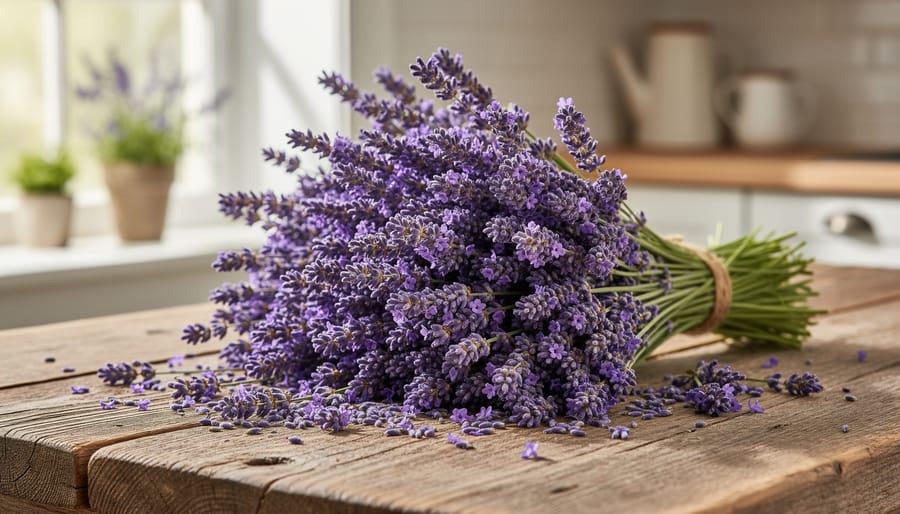
Lavender isn’t just a plant in French country design, it’s the scent and soul of Provence itself. Walk through any authentic French country home and you’ll find bundles of dried lavender hanging from beams, tucked into linen drawers, or displayed in vintage ceramic pitchers. Fresh stems cut from the garden bring vibrant purple-blue hues to casual arrangements, while dried sprigs maintain their fragrance for months, perfuming rooms with that unmistakable herbal sweetness.
The beauty of lavender lies in its versatility. Tie stems with twine and hang them in the kitchen or bathroom. Fill handmade sachets to slip between folded linens or place in closets. Arrange fresh or dried bundles in terracotta pots, ironstone crocks, or glass apothecary jars for simple, natural displays. Create wreaths for doors using lavender stems woven with olive branches or wheat stalks.
Beyond decoration, lavender connects your home to centuries of French tradition, from soap-making to cooking. It’s practical, fragrant, and visually striking without demanding fuss. One bunch goes a long way, and whether you grow your own or buy from farmers’ markets, lavender instantly elevates your space with authentic French countryside charm.
11. Rustic Beamed Ceilings Adding Character
Exposed wooden beams transform a ceiling from plain overhead space into a defining architectural feature that anchors the entire room. In authentic French country homes, these beams are often original structural supports, centuries-old chestnut or oak timbers that bear the marks of hand-hewing and age. The wood’s natural imperfections, knots, and weathered patina tell a story of craftsmanship and endurance that no reproduction can fully capture.
If your home lacks original beams, reclaimed timbers offer an honest alternative. Salvaged from old barns, factories, or demolished buildings, reclaimed beams bring genuine history and character. Look for pieces with visible saw marks, mortise joints, or traces of original finish, these details authenticate the rustic quality you’re after.
The arrangement matters as much as the beams themselves. Traditional French country ceilings feature beams running parallel across the room or in a grid pattern, often left in their natural wood tone rather than painted. The contrast between dark, aged timber and whitewashed plaster creates dramatic visual interest while maintaining the style’s understated elegance.
Even adding a single statement beam can establish the French country mood in kitchens, dining rooms, or bedrooms where full ceiling treatment isn’t practical.
12. Vintage French Market Baskets
Woven from natural materials like willow, rattan, and seagrass, vintage French market baskets carry the authenticity of decades spent on cobblestone streets and bustling village squares. These aren’t pristine, factory-fresh containers, they’re meant to show wear. Frayed edges, faded leather straps, and slight asymmetry tell stories of countless trips from farm to table.
In French country homes, these baskets blur the line between utility and decoration. Tuck one beside the fireplace to hold kindling. Hang a pair on the wall flanking a window. Fill another with fresh produce on the kitchen counter, letting garlic braids and root vegetables become part of the display. The irregular weave creates shadow and depth, adding organic texture that contrasts beautifully with smooth plaster walls and polished wood.
Look for baskets with metal or leather handles, signs of genuine French origin. Provence-style versions often feature wider, flatter shapes perfect for baguettes and market finds. Breton baskets tend toward deeper bowls with tighter weaves. Either way, their imperfect, handcrafted nature reinforces the French country principle that beauty comes from use, not perfection.
13. Soft, Layered Lighting with Warm Glow
Lighting in French country design works like sunlight filtering through shutters, soft, layered, and never harsh. The goal is creating pools of warm illumination that invite people to linger, not flood a room with sterile brightness.
Chandeliers with wrought iron frames and candle-style bulbs anchor dining rooms and entryways, their flickering effect suggesting old manor houses lit before electricity. Choose fixtures with subtle curves rather than ornate crystal, simplicity with character beats grandeur. Wall sconces flank mirrors or artwork, casting gentle upward or downward light that highlights texture in plaster walls and wooden beams.
Table and floor lamps play supporting roles, often fitted with linen or burlap shades that diffuse light into a buttery glow. Ceramic bases in cream or weathered finishes ground these pieces in the French countryside aesthetic. Layering multiple light sources at different heights creates dimension and warmth that overhead lighting alone never achieves.
Dimmers transform rigid lighting schemes into flexible moods throughout the day. The French country approach treats light as another natural element, variable, warm, and essential to making a house feel genuinely lived in rather than staged.
14. Whitewashed or Limewashed Walls
Whitewashed and limewashed walls create the soft, luminous backdrop that defines French country interiors. These traditional finishes, made by thinning white paint or mixing lime with water, leave a translucent, slightly uneven surface that lets the texture of plaster or stone show through. The result feels organic and lived-in rather than perfectly uniform.
Limewash, the more authentic European technique, penetrates porous surfaces and develops a matte patina that deepens with age. It reflects natural light beautifully, creating gentle variations in tone throughout the day. Whitewash offers a similar effect with easier application, though it sits more on the surface than soaking in.
These finishes work particularly well over textured plaster, exposed stone, or brick, where they soften hard materials without erasing their character. The slightly chalky appearance adds dimension to walls, making them feel handcrafted rather than factory-perfect. Unlike flat white paint, whitewashed and limewashed surfaces gain depth over time, showing subtle wear that enhances rather than detracts from the aesthetic.
In modern homes, these finishes bring airiness to darker rooms while maintaining the warmth that pure white paint often lacks. They pair naturally with exposed beams and natural stone, unifying rustic architectural elements.
15. Antique or Vintage Mirrors with Ornate Frames
Mirrors play a dual role in French country interiors, they’re both functional pieces and focal points that capture the play of natural light throughout the day. Look for frames with hand-carved details, gilded finishes that have mellowed over time, or painted wood in cream and soft gray tones. Authenticity matters here: genuine vintage mirrors often show slight imperfections in the glass itself, a silvering that’s worn at the edges, or a patina on the frame that machine-made reproductions can’t replicate.
Scale the mirror to its setting. A large ornate mirror above a fireplace mantel becomes the room’s centerpiece, while smaller versions grouped on a wall create unexpected visual interest. Arched tops, scrollwork, and acanthus leaf carvings are hallmarks of provincial French design. Many homeowners place mirrors opposite windows to multiply sunlight and make compact rooms feel more spacious, a practical strategy that French cottage dwellers perfected centuries ago.
Don’t worry if the silvering has darkened or developed spots. These “flaws” add character and prove the mirror’s age, distinguishing a true find from a factory-fresh imitation that lacks soul.
16. Pottery and Ceramics in Earthy Glazes
French country homes celebrate pottery and ceramics as both functional objects and artful displays. Unlike mass-produced pieces, handmade stoneware and earthenware carry visible traces of the artisan’s hand, slight variations in glaze thickness, fingerprints in the clay, organic shapes that reflect their making process. This imperfection creates authenticity.
Traditional French provincial ceramics feature earthy glazes in soft cream, sage green, warm ochre, and dusty blue. Faïence from regions like Provence and Quimper showcases hand-painted motifs, flowers, roosters, or simple geometric borders, that add personality without overwhelming spaces. These pieces ground kitchens and dining rooms with warmth.
Display ceramics openly on shelves, countertops, or rustic sideboards. A collection of mismatched café au lait bowls, a hand-thrown pitcher holding wooden spoons, or stoneware crocks storing utensils brings texture and lived-in charm. Use larger pieces like serving platters or tureens as focal points on open shelving.
Mix antique finds with contemporary artisan work. The key lies in choosing pieces with natural, matte finishes over shiny glazes, and in embracing the variations that make each item unique. Let your collection grow organically rather than purchasing matched sets, French country style values personal curation over coordinated perfection.
17. Floral Arrangements from the Garden
Fresh flowers are the soul of French country design, not forced arrangements but simple gatherings that look like you just stepped in from the garden. Sunflowers in a tall ceramic pitcher, garden roses tumbling from a vintage crock, peonies loosely arranged in a chipped enamel jug, these are flowers chosen for joy, not perfection.
The key is casual abundance. French country arrangements reject the stiff, symmetrical style of formal florals. Instead, cut what’s blooming, strip the lower leaves, and place stems in whatever vessel feels right. A cluster of lavender tied with twine and laid on a windowsill works just as beautifully as a full bouquet. Mix colors and textures freely, daisies with sprigs of rosemary, zinnias with wild grasses.
The containers matter as much as the blooms. Stoneware pitchers, weathered terracotta pots, glass milk bottles, and vintage watering cans all serve as vases. This relaxed approach distinguishes the style when comparing French country vs farmhouse aesthetics, where country blooms feel more gathered than curated.
Change arrangements with the seasons. Spring tulips and hyacinths give way to summer’s wildflowers, then autumn’s dahlias and dried hydrangeas. Even bare branches in winter bring life indoors.
18. Rooster Motifs as a Playful Symbol
The French rooster, *le coq gaulois*, has proudly strutted through French culture for centuries as an unofficial national symbol, and in French country design it brings a touch of playful patriotism to the home. Unlike more formal motifs, rooster imagery adds lighthearted character and countryside charm without taking itself too seriously.
You’ll find roosters crowing from hand-painted tiles in kitchens, embroidered onto tea towels and cushions, carved into wooden signs, or featured in folk art paintings. Vintage French pottery often showcases colorful rooster illustrations glazed onto serving platters and canisters. Some homeowners display rooster weathervanes indoors as sculptural accents, while others incorporate the motif subtly through cabinet hardware or ceramic knobs.
The key is restraint. One or two well-chosen rooster pieces create a cheerful focal point; too many can veer into kitsch. Look for handcrafted examples with folk art styling rather than mass-produced cartoonish versions. Authentic French rooster décor typically features rich reds, golds, and greens with artistic detail that reflects traditional craftsmanship. The rooster says you don’t take your décor too seriously while still honoring the French countryside spirit.
19. Heirloom Quilts and Throws for Cozy Comfort
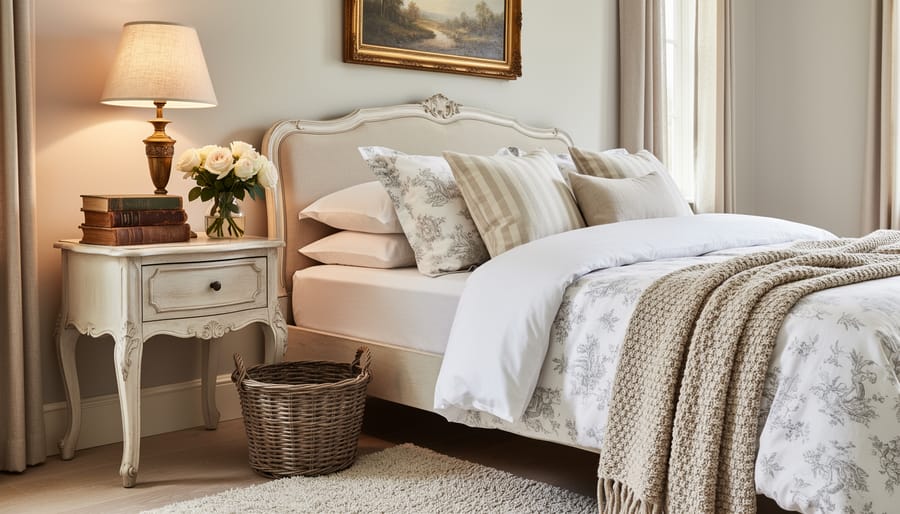
Heirloom quilts and throws transform French country rooms into havens of lived-in warmth. These aren’t pristine showpieces, they’re soft, faded textiles draped over bed frames, folded across the foot of an iron daybed, or tossed over the arm of a linen sofa. The patterns lean toward gentle florals in dusty pinks and greens, simple checks in cream and sage, or traditional Provençal prints that echo the toile and botanical motifs found elsewhere in the home.
The beauty lies in layering. A vintage quilt might top crisp white sheets, with a lighter cotton throw added for texture. In living areas, a folded quilt on a ladder or bench becomes both storage and display. Look for pieces with visible hand-stitching, slight wear along the edges, and fabrics that feel naturally softened by time.
Whether you inherit actual family textiles or source vintage finds at flea markets, these layers communicate comfort and continuity. They invite you to curl up, read, nap, to actually live in your beautifully designed space rather than just admire it.
20. Mix of Old and New for Authentic Living
French country design reaches its fullest expression when you stop treating it as a museum piece and start living in it. The most authentic rooms marry a distressed 19th-century armoire with a sleek modern sofa, or place contemporary artwork above a rustic farm table. This isn’t decorating compromise, it’s how French homes actually function, balancing heritage with everyday comfort.
Start by anchoring each room with one or two substantial antique pieces, then fill in with new furnishings that share the color palette and natural materials. A vintage linen press gains fresh relevance when paired with plush, modern upholstered seating. Chrome fixtures feel perfectly at home beside limestone counters and reclaimed beams. The key is restraint: let old pieces breathe rather than cramming every surface with weathered finds.
Apply proven decoration tips and layering tips to blend eras without visual chaos, match finish levels, repeat shapes across old and new, and keep your muted palette consistent. When something’s genuinely useful and beautiful, its age becomes irrelevant. That’s the heart of French country living.
Bringing It All Together in Your Home
You don’t need all twenty elements at once to create an authentic French country home. Start with one or two pieces that genuinely speak to you, perhaps a distressed farm table or a set of linen curtains, and build your collection gradually as you discover what fits your life and space. The beauty of this style lies in its evolution over time, mimicking how French country homes developed naturally through generations of family use.
Think of your home as a canvas for your own story rather than a magazine spread to replicate. Mix the weathered armoire you found at a flea market with your grandmother’s pottery, add fresh lavender from your garden, and don’t worry if the colors don’t match precisely. French country style celebrates the patina of real life, the nick in the table from moving day, the mismatched dining chairs collected over years, the curtains that puddle slightly on the floor because you loved the vintage linen too much to cut it.
The most successful French country rooms feel collected, not decorated. They balance old and new, formal and casual, functional and beautiful. Trust your instincts, embrace the perfectly imperfect, and create spaces that invite you to linger rather than admire from a distance.
What to Watch For
When assembling your French country rooms, resist the urge to make everything match too perfectly. The authentic charm lies in pieces that look collected over time, a slightly mismatched dining set, varied pottery glazes, or textiles that share a color family but differ in pattern scale.
Watch out for reproductions marketed as “French country” that lean too heavily into shabby chic pastels or overly distressed finishes. Genuine provincial style favors subtle, sun-bleached tones and honest wear from decades of use, not factory-applied distressing. Similarly, avoid clustering too many rooster motifs or lavender bunches in one space, which can veer into kitsch. The goal is to suggest countryside living through thoughtful, scattered accents rather than announce it with theme-park repetition. Let each element breathe within the room, and balance rustic textures with refined touches to maintain that essential French sophistication.
Frequently Asked Questions
What’s the difference between French country and farmhouse style?
French country emphasizes Old World elegance with distressed furniture, softer color palettes, ornate details like toile and wrought iron, and European antiques. Farmhouse style leans more utilitarian with cleaner lines, bolder contrasts (especially black and white), shiplap, and American rustic elements, it’s generally less formal and more minimalist than French country’s layered, collected look.
Where can I find authentic French country pieces?
Start with local antique shops, estate sales, and flea markets for genuine vintage finds. Online marketplaces like Chairish, 1stDibs, and Etsy offer curated French antiques, while European importers specialize in authentic pieces. For budget-friendly options, scout thrift stores and learn to refinish pieces yourself using distressing techniques.
Can French country style work in a small apartment?
Absolutely, focus on a few statement pieces rather than overwhelming the space. A single distressed armoire, linen curtains, and muted wall colors create the feel without clutter. Use vertical space with open shelving, keep furniture scaled appropriately, and let natural light enhance the airy Provençal atmosphere.
How much should I invest to start decorating in French country style?
You can begin with as little as a few hundred dollars by prioritizing paint (limewash or soft neutrals), thrifted furniture you refinish yourself, and natural textiles like cotton curtains. Invest more in one quality anchor piece, a farmhouse table or vintage mirror, and build around it gradually, mixing in affordable finds as you discover them.
These questions come up repeatedly as people begin exploring French country design, and the answers reveal an important truth: this style rewards patience and personal curation more than a large budget. The difference between French country and its American cousin, farmhouse style, matters because mixing the two without intention can muddy the refined, European character that makes French country distinctive.
Sourcing presents its own adventure. Authentic pieces carry stories and imperfections that new reproductions can’t replicate, but they require hunting and some knowledge of what to look for. Learning to spot quality construction, genuine wear patterns, and period-appropriate details helps you invest wisely whether you’re spending fifty dollars or five thousand.
Space constraints shouldn’t discourage you. French country homes in Provence weren’t grand estates, many were compact stone cottages where every element earned its place. That same editing discipline translates beautifully to modern apartments. Choose pieces that serve multiple purposes, embrace vertical storage, and resist the urge to cram in every element from our list. Three well-chosen French country touches in a small space create more impact than a dozen crowded into every corner.
Quick Reference: Essential Shopping and Sourcing Tips
Finding authentic French country pieces takes patience and a discerning eye, but knowing where to look, and what to look for, makes the hunt more rewarding. Whether you prefer the thrill of treasure hunting or the convenience of curated collections, multiple paths lead to genuine character and quality.
- Local antique stores and estate sales for original French farmhouse furniture, vintage textiles, and architectural salvage at fair prices with hands-on inspection
- French brocantes and vide-greniers (outdoor flea markets) for true provincial finds if you’re traveling, or their online equivalents through specialty importers
- Online marketplaces like Chairish, 1stDibs, and Etsy’s vintage sections for verified French antiques, though shipping costs on furniture can be substantial
- Architectural salvage yards for reclaimed beams, old doors, stone flooring, and wrought iron elements with authentic patina and history
- DIY distressing and aging techniques on new wood furniture using chalk paint, sanding, and wax for budget-friendly pieces with handmade character
- Trusted reproduction retailers like Ballard Designs or Pottery Barn’s French-inspired lines for new pieces that capture the aesthetic without the vintage price tag
When evaluating potential purchases, examine construction quality, dovetail joints, hand-forged hardware, and solid wood signal authenticity over particle board and plastic components. Look for genuine wear patterns where hands and feet would naturally touch, not artificially distressed edges that follow no logic. Ask sellers about provenance when possible, and don’t hesitate to walk away from pieces that feel mass-produced despite vintage claims. The best French country rooms mix a few genuine antiques with thoughtful reproductions, so invest your budget where it shows most, statement furniture and architectural elements, while supplementing with accessible new pieces in complementary styles.