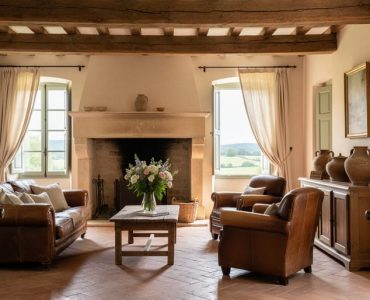
French country decor is a design style that blends rustic provincial charm with refined elegance, drawing inspiration from the farmhouses and countryside estates of rural France. It celebrates natural materials, soft color palettes, and a lived-in warmth that makes a home feel welcoming rather than staged.
If you’ve ever walked into a room and felt immediately at ease, surrounded by worn wooden beams, linen fabrics, and the kind of furniture that looks like it’s been lovingly used for generations, you’ve experienced the essence of this style. French country decor isn’t about perfection. It’s about creating spaces that feel authentic, comfortable, and rooted in a slower, more intentional way of living.
This approach to decorating has found devoted followers among homeowners who want their spaces to reflect both beauty and practicality. Unlike more minimalist or modern styles, French country embraces layers, texture, and a sense of history. You’ll see this in everything from the distressed finish on a farmhouse table to the way natural light filters through sheer curtains onto terracotta floors.
What makes French country decor particularly appealing in 2026 is its rejection of trends that feel cold or overly curated. People are craving homes that tell a story, and this style delivers exactly that. The look draws from centuries of French rural life, where function and beauty weren’t opposing forces but natural partners.
In this guide, you’ll discover what defines French country decor, the key elements that bring it to life, and how to incorporate this timeless aesthetic into your own home.
What French Country Decor Really Means
French country decor is more than a collection of design elements, it’s a lifestyle philosophy rooted in the unhurried rhythms of rural France. The style emerged from the farmhouses and country estates of Provence and other French provinces, where families lived close to the land and celebrated simple, seasonal pleasures. Unlike the ornate grandeur of formal French design with its gilded furniture and elaborate chandeliers, French country style embraces the beauty of imperfection and the comfort of well-worn surfaces. It’s about creating spaces that feel genuinely lived-in rather than carefully staged for guests.
The French country decor origins reflect a practical elegance born from necessity and resourcefulness. Provincial families furnished their homes with durable pieces built to last generations, fabrics woven from local materials, and pottery shaped by regional craftsmen. This connection to place and tradition gives the style its authentic warmth, every element tells a story of daily life, from bread-making on scrubbed pine tables to herbs drying from rustic ceiling beams.
At its heart, French country decor brings the countryside indoors by honoring natural materials, subtle colors drawn from the landscape, and the patina of age. It celebrates the French concept of living beautifully without pretense, where a chipped earthenware pitcher holds as much value as a pristine vase.
- Joie de vivre
- A joyful approach to everyday living that infuses French country homes with warmth and celebration of simple pleasures.
- Patina
- The natural wear and aged finish on furniture and objects that adds character and authenticity rather than detracting from beauty.
- Toile de Jouy
- Classic French printed fabric featuring pastoral scenes in a single color on cream or white background, named after the town where it was first produced.
This philosophy of lived-in elegance means your home can evolve organically, welcoming the marks of daily life as part of its story rather than striving for magazine-perfect perfection.
How French Country Decor Works in Your Space
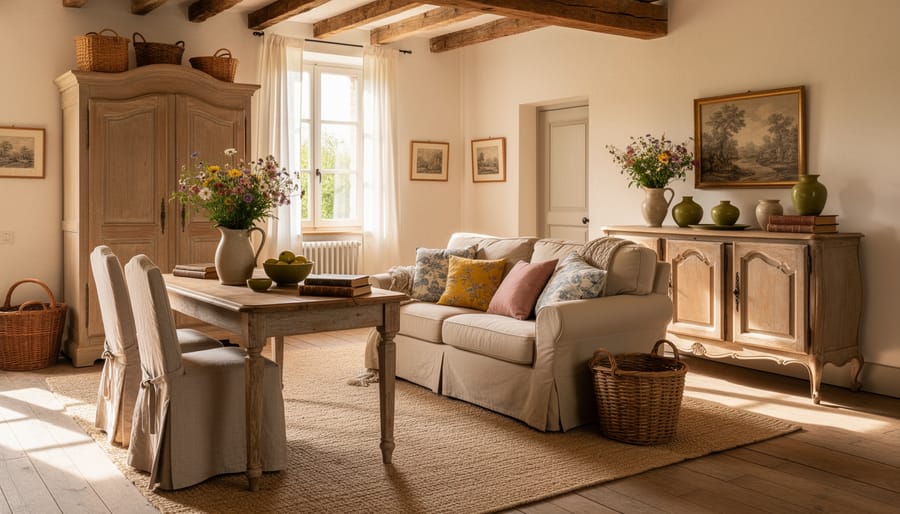
French country decor works by balancing opposites rather than choosing one aesthetic over another. The style brings together rough-hewn beams and delicate linen curtains, a centuries-old farm table paired with freshly cut lavender in a ceramic pitcher. This interplay creates rooms that feel collected over time instead of decorated all at once.
The magic lies in layering textures and materials from the same natural palette. A room might combine weathered wood floors with plaster walls, an upholstered linen sofa draped with a woven throw, and wrought iron light fixtures above a stone fireplace. Each surface offers a different tactile experience, yet they share an earthy, organic quality that ties them together. Nothing matches perfectly, and that’s the point, the slight variations in tone and finish make the space feel lived in rather than coordinated.
Color acts as the unifying thread. The soft, sun-bleached palette of French country style, creams, warm whites, dusty blues, sage greens, creates visual calm that allows the mix of textures and materials to shine without competing. A distressed armoire in weathered gray doesn’t clash with blue-striped linen cushions because both colors echo the same gentle, faded quality found in a Provençal landscape.
This approach transforms spaces by prioritizing comfort and character over perfection. A scratch on a wooden tabletop isn’t hidden; it becomes part of the story. Fabrics soften with age and washing. The rooms evolve as you live in them, which is precisely how French country homes in rural France developed their distinctive look, through decades of use, not a single shopping trip. The style works because it embraces the reality of daily life instead of fighting against it.
The Core Elements That Define French Country Style
Natural Materials and Rustic Textures
Weathered wood forms the backbone of French country interiors, and it’s the imperfections, nail holes, saw marks, sun-bleached grain, that give each piece its story. Oak beams salvaged from barns, pine tables worn smooth by decades of family meals, and reclaimed floorboards all carry the patina of age that machine-made replicas can’t replicate. This isn’t wood that’s been artificially distressed; it’s material that’s lived.
Natural stone appears in French country homes exactly as it does in the Provençal landscape: rough-hewn limestone for fireplace surrounds, river rock for kitchen backsplashes, flagstone underfoot. The irregular edges and subtle color variations, cream bleeding into ochre, grey streaked with rust, create visual texture that polished surfaces lack. These materials ground a room in the earth itself.
Wrought iron and terracotta add functional rusticity. Hand-forged iron appears in chandeliers with scrolled arms, curtain rods with hammered finials, and pot racks that showcase their joinery. Terracotta brings warmth through floor tiles, planters, and pottery, each piece slightly irregular from the kiln. Together with thoughtful decoration tips these materials layer authenticity into every corner, proving that character comes from what time and hands have touched.
The French Country Color Palette
The French country palette draws its colors directly from the Provençal countryside, imagine the soft lavender fields at dusk, the weathered blue shutters bleached by Mediterranean sun, the sage-green olive groves stretching across hillsides. These aren’t bold, saturated hues but gentle, sun-washed tones that feel lived-in from the moment you paint them on the wall.
Muted blues, from powder to faded denim, anchor the palette alongside creamy ivory and warm butter yellows that capture southern French sunlight. Sage and moss greens bring the outdoors in, while soft lavender and dusty rose add romantic warmth without sweetness. Earthy terracotta grounds everything, echoing clay roof tiles and flowerpots baking in the heat.
These colors work because they mimic natural aging, the way paint fades on exterior walls, how fabric softens after years of washing, the patina that develops on plaster. The result feels effortless rather than decorated. You won’t find stark white or vivid accent walls here. Instead, layer these muted tones together, letting one shade drift into another the way colors blur across the French countryside at golden hour.
Fabrics and Textiles
French country textiles favor natural, breathable fabrics that soften a room without fussy embellishment. Linen takes center stage, it wrinkles beautifully, ages gracefully, and brings an effortless, lived-in quality that synthetic fabrics can’t replicate. You’ll often see it in curtains, slipcovers, and table linens where its slight imperfections add character rather than detract from polish.
Cotton follows closely, especially in heavier weaves that drape well and stand up to daily use. Toile de Jouy prints, with their pastoral scenes rendered in single colors on cream backgrounds, have dressed French country bedrooms and dining chairs for centuries. Ticking stripes, those narrow navy, red, or black lines on white or cream, originally covered mattresses but now appear on pillows, upholstery, and cafe curtains throughout the home.
Provincial prints feature small-scale florals, olives, or lavender sprigs in sun-faded hues. These patterns echo the Provençal landscape without overwhelming a space. The common thread across all French country textiles is their tactile, natural quality and the sense that they’ve been handed down through generations, softening with each wash rather than looking worn out.
Furniture With History and Patina
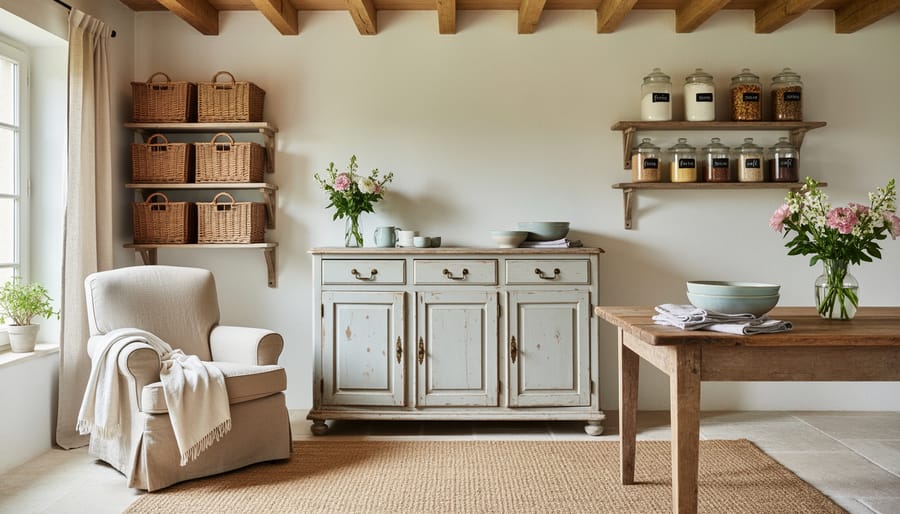
French country furniture tells a story before you even sit down. The pieces that anchor this style, a weathered oak farm table scarred from decades of family dinners, an armoire with original hand-forged hinges, ladder-back chairs with rush seats worn smooth, carry the marks of time as badges of authenticity. That’s not distressing applied by a factory; it’s the real patina of use.
Look for furniture with carved details that feel deliberate but not fussy: gentle curves on chair backs, simple turned legs, decorative corbels on shelving. The craftsmanship is visible but never showy. Wood finishes lean toward natural oak, walnut, or painted pieces in soft cream or sage that reveal hints of bare wood at the edges, as if generations have brushed past them.
Upholstered settees and bergère chairs balance the rustic elements with linen or cotton covers in muted tones, often slightly worn or faded. These aren’t showpieces meant to stay pristine, they’re built for comfort and daily life. The beauty lies in pieces that look like they’ve served a purpose for years and will continue doing so, blending function with the quiet elegance of something genuinely old.
Decorative Accents and Finishing Touches
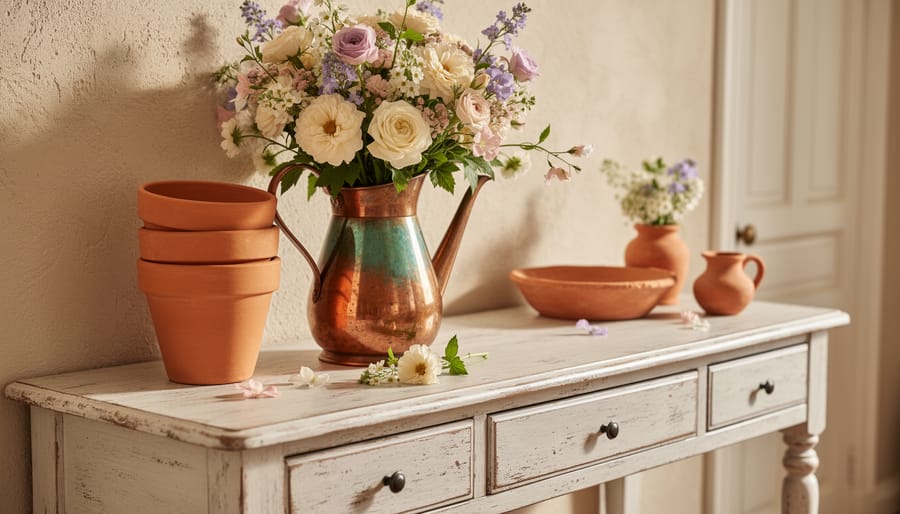
In French country decor, it’s the finishing touches that truly breathe life into a space. These aren’t showpieces chosen for perfection, they’re the everyday objects and collected treasures that tell a story and make a room feel genuinely inhabited.
Pottery plays a central role, from glazed confit pots repurposed as vases to earthenware pitchers displayed on open shelving. Look for pieces with irregular glazes, chips along the rim, or uneven shapes that speak to handmade origins. Copper cookware isn’t just functional; hanging copper pots near the stove or displaying them on pot racks adds warm metallic tones that catch and reflect light beautifully.
Fresh flowers and herbs anchor the style in nature. Lavender bundles tied with twine, sunflowers in crockery jugs, or wildflowers gathered in old wine bottles keep the connection to the countryside immediate and sensory. Vintage baskets woven from willow or wire serve both practical and decorative purposes, use them for market hauls, firewood storage, or simply stacked in a corner for texture.
The real magic happens in curated collections displayed with intention but not fussiness:
- Cluster stoneware crocks and earthenware bowls on kitchen counters or hutch shelves
- Arrange vintage botanical prints or framed herbier samples in relaxed groupings on walls
- Display copper molds, antique kitchen tools, or enamelware on hooks or open shelving
- Place fresh market flowers in mismatched pitchers throughout living spaces
- Layer woven baskets of varying sizes near entryways or under console tables
- Show collections of ironstone, transferware, or faience on plate racks or in glass-front cabinets
The key is restraint paired with authenticity. Each accent should feel chosen because you genuinely love it or find it useful, not because you’re checking boxes on a decorating list. When these finishing touches carry traces of age and use, they transform a room from decorated to deeply personal.
Where and How to Use French Country Decor in Your Home
French country decor works beautifully in spaces where you gather, cook, and live, not just rooms you showcase. The kitchen is the natural starting point. Open shelving displaying cream-colored dishes, a weathered farm table for dining, and a stone or tile backsplash create instant warmth. If you’re planning a kitchen refresh, explore French country kitchen ideas that balance function with rustic charm, or consider kitchen island ideas that anchor the space with aged wood or limestone tops.
Living rooms benefit from layered textiles, linen slipcovers on sofas, a faded rug underfoot, and toile throw pillows mixed with solid neutrals. An armoire serves as both storage and focal point, while a weathered coffee table and wrought iron candlesticks add authentic texture without feeling cluttered.
Bedrooms translate this style effortlessly. White or natural linen bedding, a vintage wooden headboard, and soft lavender or sage walls create a restful retreat. Keep surfaces simple, a pottery pitcher holding fresh lavender, a stack of well-worn books, maybe a small ceramic bowl.
In smaller homes or apartments, you don’t need to commit every room. Start with one space and let the style breathe. A single wall of shiplap painted in warm cream, a refurbished farm table, or swapping modern hardware for wrought iron pulls can shift the feeling without a full renovation.
The key is choosing rooms where the worn, lived-in quality makes sense, spaces that already center on comfort and daily use rather than formal entertaining. French country decor resists the staged look, so it works best in homes where you actually cook in the kitchen, gather around the dining table, and sink into the sofa at day’s end.
Common Questions About French Country Decor
Many homeowners worry they’ll get French country decor wrong, either making it too rustic or too precious. The truth is, once you understand the core elements, this style is forgiving and adaptable. Here are answers to the questions that come up most often when people begin incorporating French country elements into their homes.
Can French country decor work in small spaces?
Absolutely. French country’s emphasis on light colors, natural materials, and edited collections actually makes small spaces feel more open and inviting. Start with a neutral palette, one or two quality pieces with patina, and avoid overcrowding, Provençal cottages were modest in size yet still embodied the style beautifully.
What’s the difference between French country and farmhouse style?
French country leans more refined with its European roots, soft color palette, and delicate fabrics like toile and linen, while American farmhouse tends toward bolder rustic elements, shiplap walls, and a more casual approach. French country balances rustic and elegant; farmhouse skews more informal and straightforward.
How do I avoid making it look too rustic or cluttered?
Maintain the balance between rustic textures and refined touches. Pair weathered wood with upholstered seating, limit your color palette to three or four soft hues, and display collections thoughtfully rather than crowding every surface. Remember that French country celebrates edited charm, not country kitsch.
Is French country decor expensive to achieve?
Not necessarily. You can start affordably by painting existing furniture in soft neutrals, swapping in linen curtains, and adding vintage finds from flea markets. Authentic French country values pieces with history and patina over new luxury items, making thrift stores and estate sales ideal hunting grounds.
The key to getting French country right is patience. This style rewards gradual layering and thoughtful curation over fast room makeovers. You don’t need to transform your entire home at once, start with one room, focus on incorporating natural materials and the soft Provençal palette, and let the space evolve as you discover pieces that speak to you. The most authentic French country homes feel collected over time, not decorated in a weekend, and that unhurried approach is part of what makes the style so enduringly appealing.
French country decor endures because it refuses to choose between beauty and comfort. The style’s genius lies in how those core elements, weathered wood, soft linens, sun-washed colors, time-worn furniture, create spaces that feel both refined and genuinely livable. You’re not decorating to impress; you’re building a home that embraces you.
Start small. Choose one or two elements that resonate with you, perhaps a farmhouse table with honest wear marks, or linen curtains in that perfect faded sage. Let these pieces anchor your space, then layer gradually. French country style rewards patience and authenticity over instant transformation.
The beauty of this approach is its flexibility. Your interpretation doesn’t need to mirror a Provençal cottage exactly. A single vintage armoire in a modern apartment, natural stone paired with contemporary fixtures, toile pillows on a streamlined sofa, these combinations work because the fundamental principles remain constant. Prioritize natural materials, embrace imperfection, and favor pieces with history or character.
French country decor teaches us that welcoming home decor comes from authenticity, not perfection. Build your space thoughtfully, trust your instincts, and create rooms that feel like they’ve been loved for generations, because soon, they will be.