A French country kitchen island transforms your cooking space into the heart of the home, blending rustic elegance with hardworking functionality through signature elements like distressed finishes, butcher block surfaces, and open shelving that invites both preparation and gathering. The key to an authentically French island lies in choosing materials that look lived-in rather than showroom-perfect: think reclaimed wood bases, natural stone countertops with visible veining, and a palette of creamy whites, soft grays, and weathered blues that echo the farmhouses of Provence and Normandy.
Unlike sleek contemporary islands, a French country design celebrates imperfection and patina. The best examples incorporate practical features such as pot racks suspended overhead, baskets tucked into open lower shelves, and farmhouse sinks that become focal points rather than afterthoughts. You’ll want to consider proportions carefully, as French country style favors furniture-like islands that feel more like antique work tables than built-in cabinetry.
This collection presents 12 distinct island approaches, each showcasing different ways to capture that effortlessly elegant French aesthetic while meeting modern kitchen demands. Whether you’re drawn to the romance of carved corbels and turned legs or prefer the simplicity of a rustic farm table repurposed as a prep station, these French country kitchen ideas will help you create an island that feels both timeless and genuinely yours.
What Makes a Kitchen Island French Country
A French country style island doesn’t simply appear in your kitchen through purchasing furniture with ornate details. The authenticity comes from understanding what the French countryside genuinely valued: materials that age gracefully, surfaces that show their natural grain and texture, and designs that prioritize both beauty and everyday use.
Natural materials form the foundation. Wood appears weathered rather than perfectly finished, with visible knots and grain patterns celebrated instead of hidden. Stone countertops, think limestone, soapstone, or marble, bear the subtle variations and imperfections that come from the earth. These aren’t flawless surfaces but living materials that develop character over time.
The color palette stays rooted in the French landscape. Soft creams echo limestone buildings, muted blues mirror lavender fields at dusk, sage greens reflect olive groves, and warm grays suggest aged shutters. These aren’t bright statement colors but gentle tones that create a backdrop for daily life.
What truly sets French country islands apart is their refusal to choose between elegant and practical. Turned legs might look decorative, but they also make cleaning floors easier than solid cabinet bases. Open shelving displays beautiful pottery while keeping everyday dishes within reach. Corbels support countertop overhangs while adding architectural interest. Every detail works double duty, blending the refined sensibility of French design with the unpretentious functionality of rural living.
How We Chose These Island Ideas
We curated these twelve island ideas by focusing on what actually works in real French country kitchens, not just what looks pretty in magazine spreads. Each concept had to meet four essential criteria before making our list.
First, authenticity matters. Every island here honors genuine French country principles, natural materials, time-worn finishes, and that unmistakable blend of rustic charm with understated elegance. We skipped trendy interpretations that merely borrow superficial elements.
Second, these islands function beautifully in modern homes. You need workspace, storage, and gathering space that fits how you actually cook and live today, not a decorative piece that collects clutter.
Third, we included options for various kitchen sizes and budgets. Whether you’re working with a compact galley or a sprawling open-plan space, you’ll find ideas that translate to your reality.
Finally, real-world application guided every choice. These are islands homeowners have successfully implemented, not theoretical concepts that look good on paper but fail in practice.
1. Reclaimed Wood Island with Open Shelving
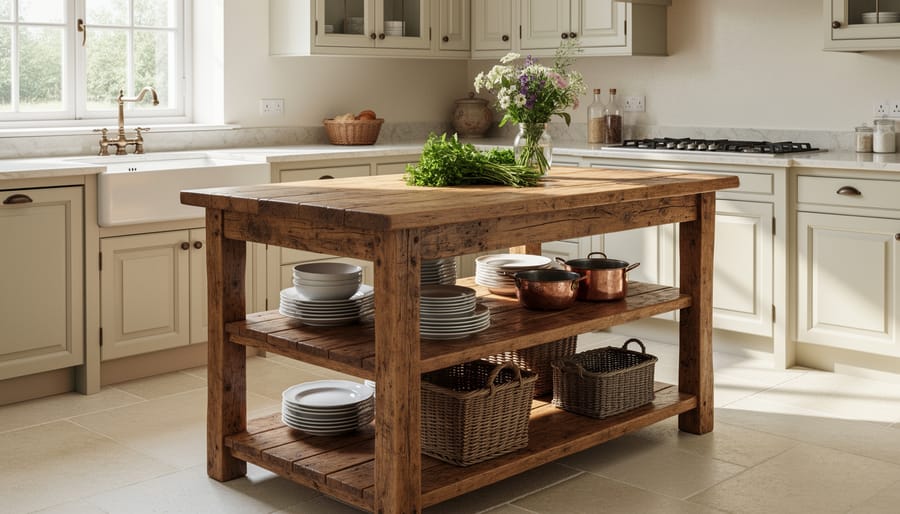
A reclaimed wood island brings soul and history into your kitchen, each weathered plank tells a story of barns, old fences, or salvaged beams that have aged naturally over decades. The patina, knots, and subtle color variations in reclaimed timber create instant warmth that new wood simply can’t replicate. Pair this with open shelving along the island’s sides or back, and you’ve got both rustic charm and practical display space for your favorite Provençal pottery, stacked linen tea towels, or well-loved cookbooks.
Open shelving keeps everyday items within arm’s reach while adding visual interest. Arrange cream-colored stoneware pitchers alongside copper mixing bowls, or stack woven baskets for storing root vegetables. The key is curated simplicity, not cluttered, but lived-in.
Sourcing reclaimed wood takes some legwork. Check architectural salvage yards, demolition companies, or specialty lumber dealers who clean and mill salvaged timber. Barn wood and old oak flooring are particularly durable choices. Expect to pay more per board foot than new lumber, but the character justifies the cost.
When styling your shelves, echo the Provence color palette through displayed items, soft blues, ochre yellows, and natural terracotta. Rotate seasonal touches like fresh lavender bundles or heirloom tomatoes in wire baskets to keep the look dynamic and authentically French country.
2. Stone or Marble-Topped Island with Turned Legs
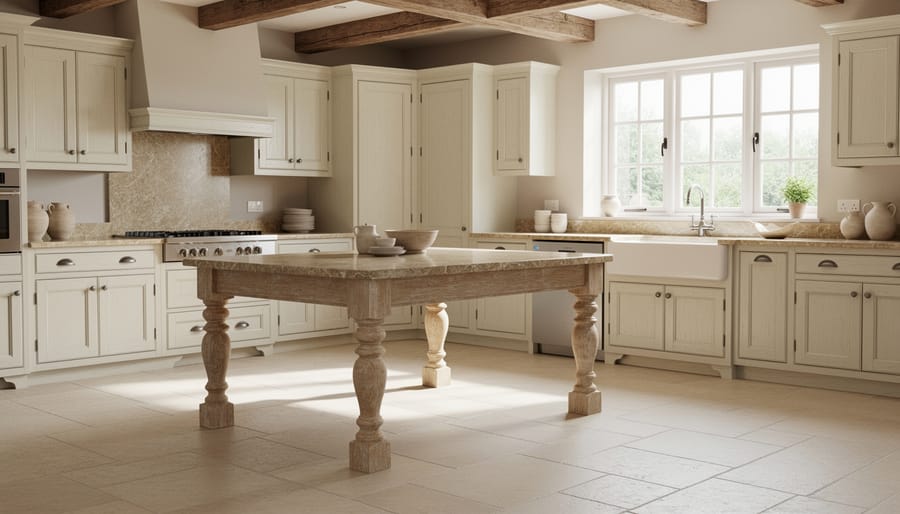
Natural stone countertops paired with ornately turned wooden legs strike the perfect balance between French elegance and rustic charm. This combination transforms your island into a statement piece that anchors the entire kitchen.
Marble remains the most coveted choice, especially Carrara or Calacatta varieties with their soft gray veining that recalls centuries-old French châteaux. Limestone offers a warmer, more muted alternative with subtle color variations that age beautifully over time. Soapstone presents a darker, moody option that develops a rich patina through everyday use, giving your island genuine character from the start.
The turned legs are what truly make this design French country rather than simply elegant. Look for substantial legs with classical detailing, not the spindly versions found in contemporary furniture. Hand-carved acanthus leaves, fluting, or rope-twist patterns add authentic period charm. The legs should feel hefty enough to visually support the weight of the stone above.
Maintenance matters with natural stone. Seal marble and limestone every six months to prevent staining from wine, citrus, or oils. Embrace minor etching and wear as part of the authentic aged aesthetic. Soapstone requires periodic mineral oil application but resists stains naturally. These aren’t pristine showpieces, they’re working surfaces meant to develop stories through daily life.
3. Painted Island in Soft Provence Colors
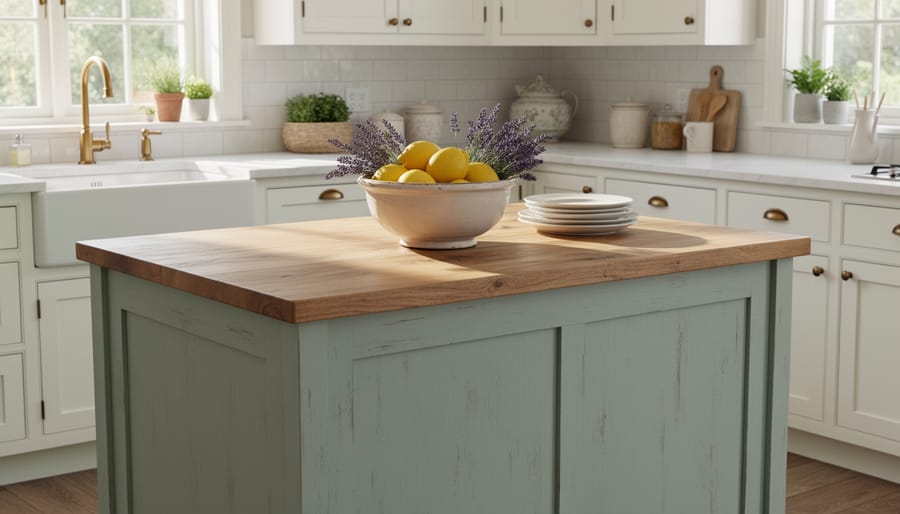
A painted island in soft Provence colors instantly transports your kitchen to the sun-drenched countryside of southern France. The most authentic shades mirror the natural landscape: think dusty lavender fields, weathered shutters in faded blue, sage green olive groves, or the warm cream of aged plaster walls.
These muted tones work beautifully because they carry history in their very nature. Unlike bright, saturated colors, soft Provence hues have gray undertones that suggest years of Mediterranean sun and gentle wear. A pale blue-gray island paired with warm white cabinetry creates serene contrast, while sage green against natural wood tones brings organic harmony to your space.
The finish matters as much as the color itself. A flat or matte paint mimics authentic lime-washed plaster, while a slight distressing technique reveals hints of darker base color or raw wood beneath. You can achieve this aged patina by lightly sanding edges and corners after painting, or applying a thin glaze that settles into grooves and details.
When selecting your island color, consider what already exists in your kitchen. Your island should complement rather than match your cabinetry. If your walls are cream, a soft blue island adds gentle punctuation. Existing wood tones warm up cooler shades, while stone countertops ground the palette in natural beauty.
4. Butcher Block Island with Farmhouse Sink
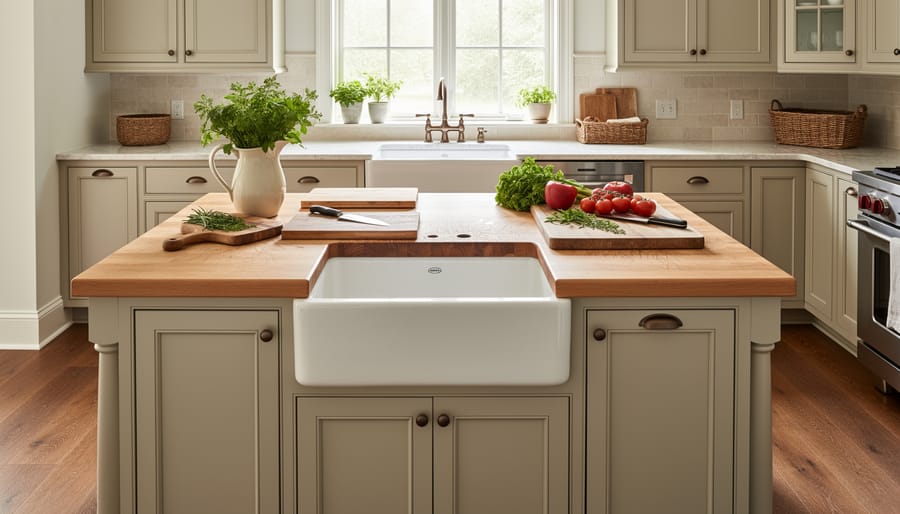
A butcher block island paired with a farmhouse sink transforms your kitchen into a genuine working heart that would feel right at home in a French country kitchen. The thick wood countertop offers an immediate warmth and organic texture that anchors the space, while the deep apron-front sink provides the kind of generous, practical workspace French cooks have relied on for generations.
The beauty of butcher block lies in its dual nature. It’s forgiving enough to absorb knife marks and develop character over time, yet durable enough to handle daily meal prep. Maple and walnut are popular choices for their tight grain and resistance to moisture, though oak brings a more rustic grain pattern that complements the French country aesthetic. Apply food-safe mineral oil monthly to protect against water damage and maintain the wood’s honey tones.
For the sink, fireclay delivers classic white farmhouse appeal with remarkable durability against chips and scratches. Copper offers living patina that deepens with age, creating an heirloom quality that perfectly suits French country sensibilities. Both materials pair beautifully with the warm wood tones. Install the sink as a true undermount to let water drain directly into the basin, keeping your butcher block protected.
This combination creates a prep station you’ll gravitate toward naturally, whether washing vegetables from the garden or kneading dough on the generous wooden surface.
5. Island with Decorative Corbels and Molding
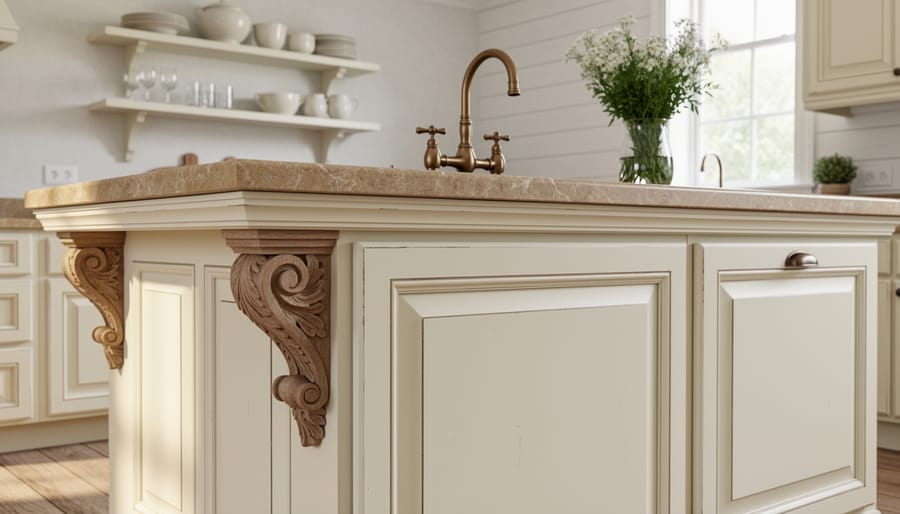
The architecture tells the story before you ever cook a meal. Decorative corbels, crown molding, and beadboard paneling transform a basic island into something that looks like it belongs in a Provençal manor house, all while working within a standard cabinet structure.
Corbels deserve special attention. These carved wooden brackets supporting your countertop overhang shouldn’t be an afterthought. Choose designs with subtle curves and turnings rather than overly ornate scrollwork. French country favors gentle flourishes over baroque complexity. Position them at corners and beneath seating areas where they’ll provide both visual weight and genuine structural support.
Crown molding along the island’s top edge creates a furniture-like quality that distinguishes French country from purely utilitarian kitchen design. Pair it with a base molding that mirrors your kitchen cabinets for continuity. The molding shouldn’t scream for attention, it should whisper elegance.
Beadboard paneling on the island’s sides adds texture and traditional charm without overwhelming the space. Vertical grooves catch light beautifully and provide visual interest at eye level when you’re seated. Paint it in your island’s base color or leave it natural wood for contrast.
The key is restraint. One or two architectural details create character. Four or five create clutter. Let each element breathe.
6. Wine Storage and Glass Rack Island
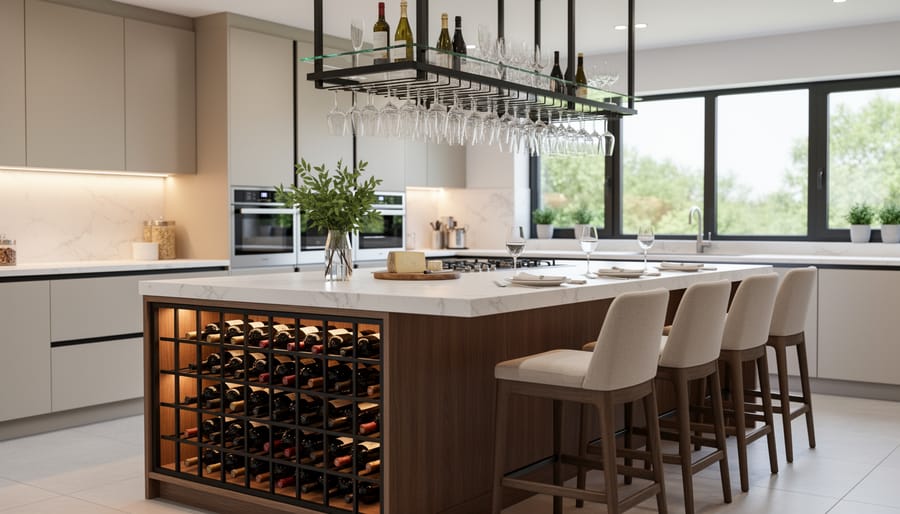
A French country kitchen island can celebrate the traditional French love of wine by incorporating dedicated storage that’s both beautiful and practical. Built-in wine racks nestled into the island’s base create an inviting display while keeping favorite bottles within easy reach during meal preparation or entertaining. These racks work best along the island’s side or end panels, leaving the top surface clear for food prep and serving.
Glass racks mounted beneath an overhang or integrated into open shelving add another layer of functionality. Stemware hanging upside-down becomes part of the kitchen’s visual charm, especially when the glasses catch natural light. For serious wine enthusiasts, a small wine refrigerator tucked into the island base maintains proper temperature without sacrificing the overall aesthetic, particularly when faced with matching cabinetry panels.
The key is balancing storage with workspace. Reserve at least one continuous countertop section for cutting, chopping, and assembling dishes. Wine storage works beautifully on the side facing your dining area or living space, transforming the island into a natural gathering spot where guests can help themselves. Choose wrought iron wine holders or dark wood racks with an aged finish to maintain authentic French country character while creating a kitchen centerpiece that invites conversation and connection.
7. Two-Tone Island with Contrasting Countertop
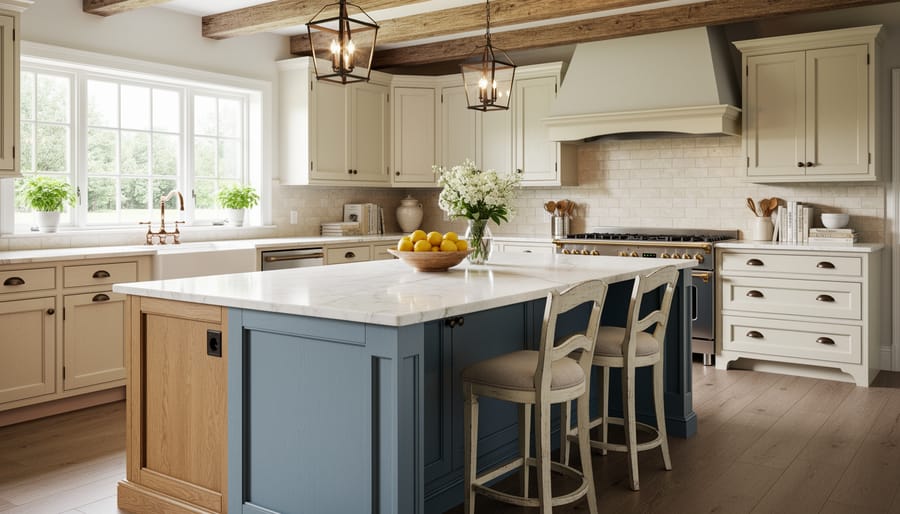
A two-tone island creates visual depth that feels intentional rather than accidental, the key is pairing materials that share French country DNA while offering contrast in color or texture.
The most successful combinations balance painted cabinetry with natural surfaces. Think a soft sage or weathered cream base topped with warm walnut butcher block, or dove gray cabinets crowned with honed marble. The painted element brings refinement, while the natural countertop adds organic warmth that prevents the look from feeling too precious.
Zinc countertops paired with white or cream cabinetry deliver authentic French bistro character. The metal develops a living patina over time, darkening and gaining character with use, exactly the aged quality French country style celebrates. This combination works especially well in kitchens with stainless appliances, creating cohesion without matching everything perfectly.
Color contrast works best when you limit intensity. Pair a deeper island base, perhaps French blue or charcoal, with lighter surrounding cabinetry, using a natural stone or wood top as the bridge between the two. This grounds the kitchen visually while maintaining the airy feel French country requires.
Avoid stark contrasts like black-and-white or ultra-modern material pairings. The goal is layered interest that looks collected over time, not designed in a single shopping trip. When both elements could plausibly exist in a French farmhouse, your contrast will feel authentic.
8. Antique or Vintage Furniture-Style Island
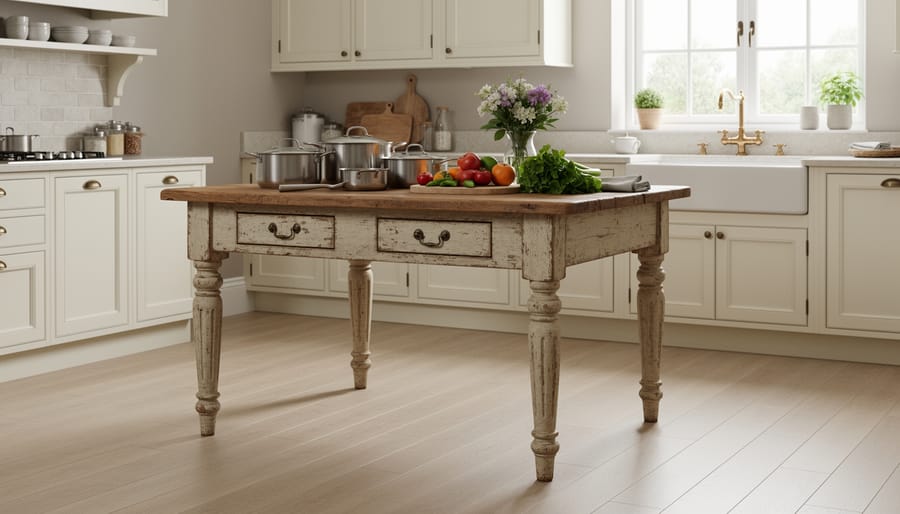
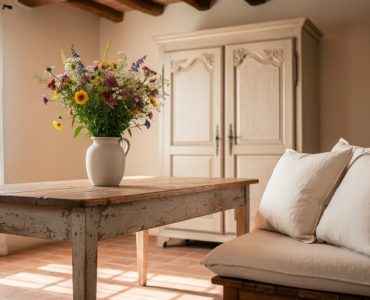
There’s something magical about transforming a genuine French antique into the centerpiece of your kitchen. An old farmhouse table, a weathered baker’s workstation, or a sturdy buffet brings instant authenticity that no new construction can replicate. These pieces carry history in their worn surfaces and hand-carved details, and their furniture-style legs create an open, airy feel that’s quintessentially French country.
Finding the right piece takes patience. Estate sales and antique markets in rural areas often yield authentic European farmhouse furniture at reasonable prices. Architectural salvage yards sometimes stock French baker’s tables with their characteristic marble tops and lower shelves. Online marketplaces can work too, though inspect carefully for structural soundness before committing. Look for solid wood construction and proportions that won’t overwhelm your kitchen, typically 30-36 inches deep and whatever length your space allows.
The beauty of furniture-style islands lies in their adaptability. Many antique buffets already offer drawer storage and lower shelving, perfect for displaying copper cookware or rustic pottery. A farmhouse table gains functionality with the addition of hooks along the sides for hanging utensils or dish towels. You might add a butcher block top to a leggy console, or install a shallow drawer beneath an antique table’s surface for flatware.
Preserve the patina and character marks, chips, scratches, and worn paint tell the story. These imperfections are what make the piece authentically French country, creating a lived-in warmth that feels welcoming rather than precious.
9. Island with Seating and Turned Barstool Placement
The kitchen island transforms into a gathering spot when you add seating, creating space for morning coffee, homework sessions, or friends chatting while you cook. For comfortable seating, your island needs an overhang of at least 12 to 15 inches beyond the base cabinets, allowing enough knee room without guests feeling cramped.
Counter-height seating (around 24 to 26 inches from floor to seat) pairs best with standard 36-inch-high counters. Space your stools 24 to 30 inches apart, center to center. This prevents that awkward elbow-bumping situation when everyone’s seated.
The barstool style makes all the difference in achieving authentic French country charm. Look for rush or woven seats that bring natural texture, ladderback designs with slender spindles, or painted wood frames in soft cream or aged blue. Turned legs with gentle curves echo the same details you might find on the island itself. Avoid ultra-modern metal or sleek upholstered styles, they’ll clash with the rustic elegance you’re building.
If your island has a stone or marble top, consider adding a narrow wood trim along the seating side. This small detail protects the stone edge from chips while adding warmth where people naturally rest their arms.
10. Island with Pot Rack and Hanging Storage
A wrought iron or copper pot rack suspended above your island transforms it into both a functional workspace and a stunning focal point. This centuries-old French practice keeps your most-used cookware within arm’s reach while creating visual interest overhead, a perfect marriage of beauty and efficiency.
The magic happens when you display gleaming copper pots, well-seasoned cast iron, or vintage enamelware that catches the light and adds warm metallic tones to your kitchen. Choose a pot rack with decorative scrollwork or hammered details that echo traditional French metalworking. The patina on aged copper or the matte black of wrought iron brings authentic character that new cabinetry simply can’t match.
Beyond pots, use S-hooks to hang bundles of dried herbs, garlic braids, or frequently-used utensils like wooden spoons and whisks. This vertical storage frees precious cabinet space while keeping cooking essentials visible and accessible. It’s the kind of practical kitchen design inspiration that French farmhouse cooks have relied on for generations.
Make sure your pot rack is properly anchored to ceiling joists, positioned high enough to avoid head bumps but low enough to reach comfortably. The island below becomes your prep station with everything you need hovering just overhead, exactly how a working French country kitchen should feel.
11. Distressed or Antiqued Finish Island
Authentic French country design celebrates the beauty of age and use, making a distressed or antiqued island finish one of the most genuine expressions of this style. Unlike pristine contemporary cabinetry, these techniques create depth and history, transforming new construction into pieces that appear to have weathered decades in a Provençal farmhouse.
Distressing works best on painted surfaces. After applying your base coat in cream, sage, or powder blue, lightly sand edges, corners, and areas that would naturally wear over time, around handles, along the base, near the countertop. This reveals underlying wood or a contrasting paint layer, mimicking years of gentle use. For deeper character, try dry brushing a second color over raised details like molding or panels, then wiping away excess before it dries.
Glazing adds warmth and age through translucent layers. Apply a tinted glaze (typically brown or gray) over dried paint, then wipe strategically to leave color settled in grooves and recesses. This creates the subtle patina of accumulated time.
Professional finishers can achieve museum-quality results, but these are accessible DIY techniques for French country kitchen upgrades. Start on a hidden area or scrap board to practice. Remember: imperfections aren’t mistakes here, they’re authenticity marks that give your island soul and story.
12. Compact Island for Smaller French Country Kitchens
A smaller kitchen doesn’t mean sacrificing French country character, it just requires smarter choices. Narrow islands measuring 24 to 30 inches deep provide workspace and storage without overwhelming the room, while maintaining the essential three-foot clearance on all sides for comfortable movement.
Mobile islands on casters offer remarkable flexibility. You can position them where needed for prep work, then roll them aside during gatherings or when you need extra floor space. Look for versions with locking wheels and a butcher block or painted wood finish to maintain authentic style. Many include towel bars, spice racks, or small wine storage built into the sides, vertical features that maximize utility without expanding the footprint.
Drop-leaf or fold-down extensions provide occasional extra surface area for rolling pastry or setting out breakfast, then tuck away when not needed. This transforms a compact island into a surprisingly versatile piece.
Antique baker’s tables, farmhouse work tables, or repurposed French consoles naturally suit smaller spaces while delivering instant character. Their furniture-style legs create visual lightness compared to bulky cabinet bases, making the room feel more open. Add a stone or marble remnant for the top, often available at lower cost, and you’ve created an island with authentic French country soul that respects your kitchen’s proportions.
Bringing Your French Country Island to Life
Turning inspiration into reality starts with a clear plan. Begin by measuring your kitchen carefully, you’ll need at least 36 inches of clearance on all working sides of the island, and 42 to 48 inches feels more comfortable in high-traffic areas. These numbers matter more than the island’s beauty, so don’t skip this step.
Before you commit to a design, work through these essential considerations:
- Measure existing clearances and traffic flow patterns in your kitchen
- Identify any plumbing or electrical work needed for sinks, outlets, or appliances
- List your storage priorities, pots, pantry items, wine, or serving pieces
- Assess how the island style will harmonize with existing cabinetry and finishes
Your budget shapes the path forward, but authentic French country doesn’t demand expensive custom work. Repurposing a vintage farmhouse table or antique buffet often costs less than new cabinetry while delivering more character. Custom-built islands offer precise dimensions and integrated features, but skilled DIYers can achieve stunning results by combining stock cabinets with architectural salvage, reclaimed wood, and thoughtful finishing techniques. The key is matching your approach to your skills and timeline, a weekend warrior might start with painting and distressing an existing island, while a full kitchen renovation calls for professional coordination of plumbing, electrical, and carpentry trades.
Common Questions About French Country Kitchen Islands
What wood types work best for a French country kitchen island?
Oak, pine, walnut, and cherry are excellent choices because they age beautifully and develop the warm patina central to French country style. Reclaimed wood from old barns or farmhouses brings instant character, while new wood can be distressed to achieve that lived-in look.
How do I maintain natural stone countertops on my island?
Seal marble, limestone, or soapstone annually to protect against stains and etching. For daily care, wipe spills immediately and clean with pH-neutral soap and water rather than acidic or abrasive cleaners that can damage the surface.
Can I mix French country style with modern appliances?
Absolutely. The key is balance, choose stainless steel or panel-ready appliances that blend rather than dominate, and surround them with authentic materials like distressed wood, natural stone, and vintage-inspired hardware. Your island can bridge old-world charm with contemporary convenience.
What’s the ideal size for a French country kitchen island?
Allow at least 36 to 42 inches of clearance on all sides for comfortable movement. A standard island runs 4 to 7 feet long and 2 to 4 feet deep, though smaller kitchens work beautifully with compact 3-foot islands or wheeled carts that maintain the aesthetic without overwhelming the space.
How much does a French country island typically cost?
Costs vary widely based on materials and construction. A repurposed antique table might run a few hundred dollars, while a custom-built island with stone countertops and decorative details can range from two thousand to ten thousand dollars or more. Many homeowners find middle ground by combining stock cabinetry with quality natural materials and vintage-inspired finishing touches.
These questions reflect what homeowners genuinely wonder when planning their French country kitchen transformation. The beauty of this style lies in its flexibility, you can invest in a few authentic elements like reclaimed wood or natural stone and build your island’s character over time. Don’t feel pressured to achieve perfection immediately. French country design celebrates the marks of use and age, which means your island will actually improve as it becomes part of your daily life and gathers its own stories.