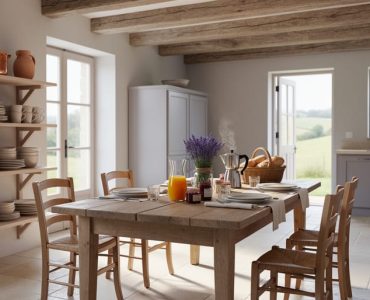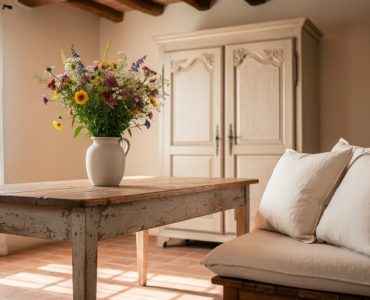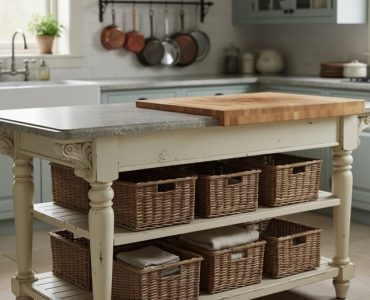
Transforming a house into a home that feels authentically yours comes down to twelve essential principles that professional designers return to again and again. Whether you’re starting from scratch or refreshing a single room, these strategies address the fundamentals that make spaces work beautifully: how to anchor a room with a strong focal point, balance scale and proportion, layer lighting for atmosphere, and edit ruthlessly so every piece earns its place. The advice here draws from both timeless design wisdom and real-world application, with insights rooted in the warmth and livability of French country interiors where comfort and beauty walk hand in hand.
Most decorating challenges stem from a handful of predictable mistakes: rooms that lack a clear purpose, furniture pushed against walls like waiting room chairs, or spaces lit only by a single overhead fixture. The good news? Small, intentional changes create dramatic improvements. You don’t need to replace everything or hire a designer. You need a clear framework and the confidence to trust your instincts while applying proven principles that work across budgets and styles. These twelve tips offer exactly that, from creating visual flow between rooms to personalizing your space with objects that tell your story, not someone else’s.
How We Chose These Home Decoration Tips
We selected these twelve tips by evaluating what works consistently across different home styles and living situations. Each recommendation had to meet four standards: versatility (applicable whether you’re decorating a French country island, a modern loft, or a rental apartment), proven track record in real homes (not just theory), accessibility for DIYers without specialized tools or massive budgets, and validation from professional decorators and contractors we consulted during research.
We prioritized techniques that deliver visible impact quickly, require minimal investment to start, and respect how people actually live. That means no advice demanding you rip out walls or buy entirely new furniture sets. These tips work with what you already own, accommodate different skill levels, and can be applied one at a time rather than requiring a complete overhaul.
1. Start with a Focal Point to Anchor Your Room
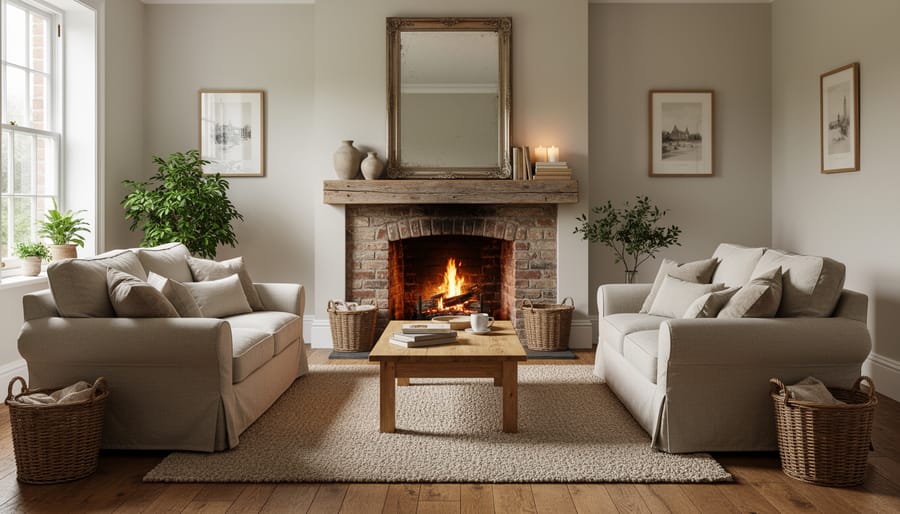
Every well-decorated room tells a story, and that story begins with a focal point, the element your eye lands on first when you walk through the door. Without this visual anchor, a room can feel scattered, no matter how lovely each individual piece might be.
A focal point can be architectural, like a fireplace with its natural draw, or created through design choices, a gallery wall, an oversized mirror, or a statement piece of furniture. In French country homes, you’ll often see a rustic stone mantel adorned with simple treasures or a weathered armoire commanding attention with its carved doors and time-worn patina.
If your room lacks an obvious focal point, you can create one. Hang a large piece of art on the most visible wall. Position a beautiful antique dresser opposite the entry. Paint one wall in a warm, contrasting color to draw the eye.
Once you’ve identified your anchor, arrange your furniture to honor it. Angle your sofa toward the fireplace rather than away from it. Flank your statement piece with complementary elements, matching chairs beside a hearth, sconces framing artwork. This intentional arrangement creates visual harmony and guides how people naturally move through and experience your space.
2. Layer Textures for Depth and Warmth
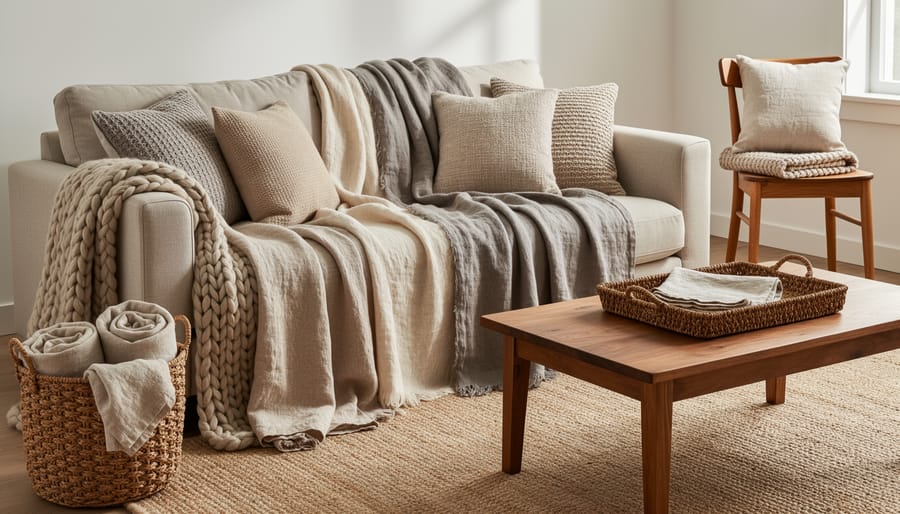
Rooms decorated in a single texture feel flat, no matter how beautiful the color palette. The secret to depth and warmth lies in layering different materials so your eye travels across rough and smooth, matte and sheen, soft and solid surfaces.
French country homes demonstrate this principle beautifully. A worn oak dining table pairs with linen chair slipcovers, wrought iron candlesticks rest on a stone mantel, and cotton curtains frame windows flanked by wooden shutters. Each material brings its own character, and together they create spaces that feel collected over time rather than purchased in one afternoon.
Start with your larger pieces. If you have a leather sofa, balance it with a chunky knit throw and velvet pillows. A sleek marble coffee table needs the softness of a jute rug underneath and perhaps a wooden tray on top. Metal lamps warm up beside linen lampshades.
The trick is variety without chaos. Limit yourself to three or four main textures per room, then repeat them in different applications. Linen might appear in curtains, pillow covers, and a table runner. Wood shows up in furniture, picture frames, and decorative bowls. This repetition creates cohesion while the mix of materials adds the visual richness that makes a room feel finished and inviting.
3. Use a Neutral Base with Accent Colors
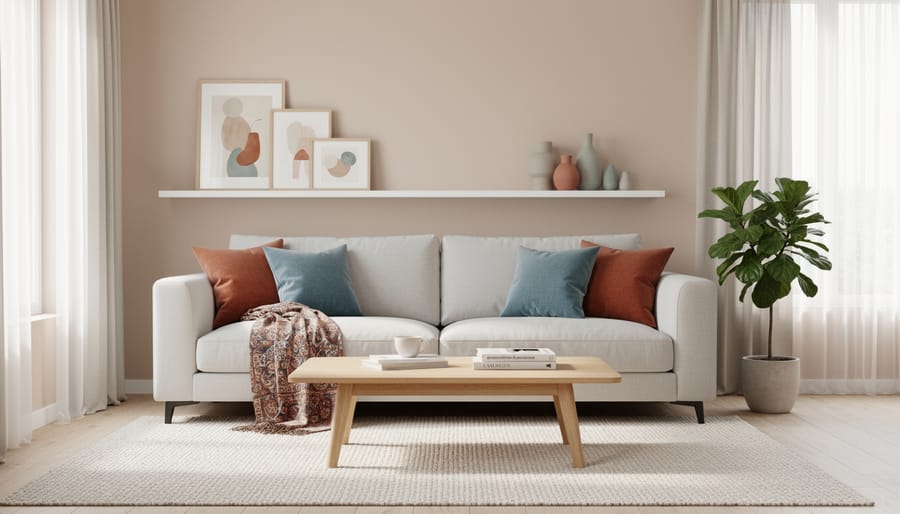
A neutral foundation gives you decorating freedom that bold wall colors can’t match. When you paint your walls in soft whites, warm creams, or gentle grays, you create a backdrop that works with any furniture you already own and adapts as your taste evolves.
Think of neutrals as your canvas. A living room with ivory walls welcomes a navy velvet sofa today and a sage linen one next year without requiring a full repaint. French country homes have perfected this approach, creamy plaster walls let lavender curtains, muted blue pottery, and weathered wood furniture take center stage without competing for attention.
Start by testing paint samples on your walls. Brush two-foot squares in different areas of the room and observe them throughout the day. That “perfect white” might read stark at noon and dingy at dusk. Look for undertones, some whites lean pink, others yellow or gray, and choose what complements your natural light.
Once your neutral base is established, bring personality through easily changeable accent pieces. Throw pillows, artwork, vases, and blankets add pops of sage, terracotta, or dusty blue without long-term commitment. Swap them seasonally or when you crave a refresh. This layered approach costs less than repainting and keeps your home feeling current without chasing every trend.
4. Bring in Natural Elements for Timeless Appeal
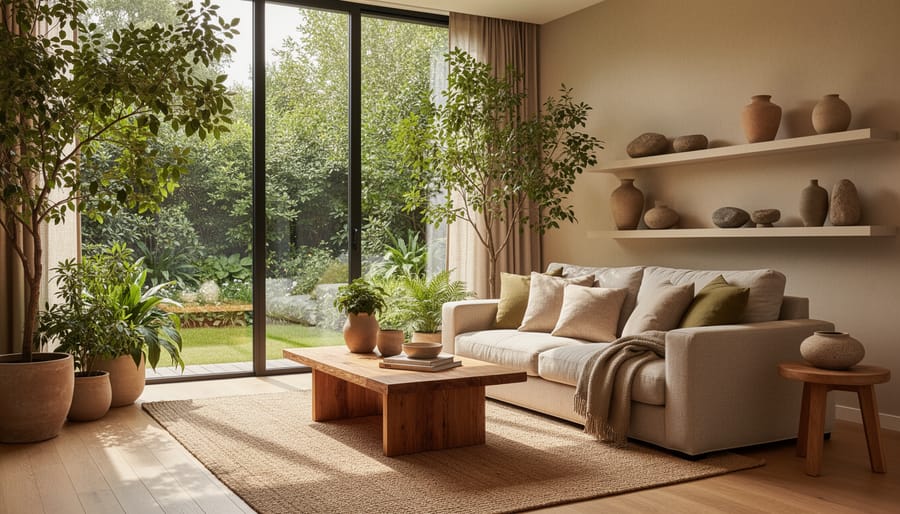
Nature brings instant warmth to any room, and it costs far less than you’d think. A handful of fresh eucalyptus in a ceramic pitcher, a bowl of lemons on the counter, or a potted rosemary plant on the windowsill, these simple touches ground your space and make it feel lived-in, not staged.
French country homes have perfected this approach for centuries. Walk into a Provençal kitchen and you’ll see olive branches in ironstone crocks, lavender bundles tied with twine hanging from beams, and woven baskets holding everything from firewood to market finds. These aren’t decorations purchased to match a color scheme; they’re functional, beautiful elements that change with the seasons.
Start with what grows locally and what you’ll actually use. Herb pots double as decor and dinner ingredients. A wooden dough bowl filled with seasonal fruit looks beautiful on a floating island or dining table. In spring, fill vases with flowering branches from your yard. Come autumn, switch to dried hydrangeas or wheat stalks that last for months.
For low-maintenance options, choose hardy succulents, preserved moss in frames, or high-quality faux olive stems (the kind that feel real when you touch them). Stone, whether it’s a marble tray, river rocks in a bowl, or a slate cheese board, adds texture without needing water or sunlight.
5. Scale Your Furniture to the Room Size
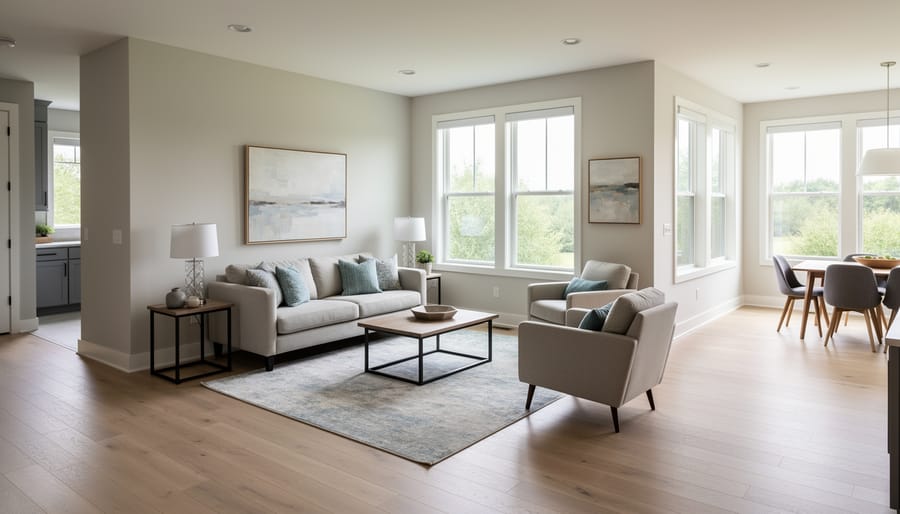
Nothing shrinks a room faster than furniture that’s too big, and nothing makes it feel emptier than pieces that are too small. Getting the scale right transforms how a space functions and feels, yet it’s one of the most common decorating mistakes homeowners make.
Before you buy anything, measure your room and sketch a simple floor plan. Know the dimensions of doorways, windows, and existing pieces. Then measure potential furniture at the store or online, imagining how it’ll sit in your actual space. A sectional that looks perfect in a showroom can swallow a modest living room whole.
I saw this firsthand when a friend struggled with her cramped living room. She’d inherited a massive three-seater sofa that blocked the windows and left barely two feet to squeeze past the coffee table. We replaced it with a scaled-down loveseat and swapped the oversized coffee table for a slimmer oval one. Suddenly, the room breathed. Light reached the corners, conversation felt natural again, and guests could actually move around without doing a sideways shuffle.
Here are practical spacing guidelines to keep handy:
- Leave 18 inches between the sofa and coffee table for comfortable legroom
- Allow 30-36 inches for main walkways so two people can pass comfortably
- Choose rugs large enough that furniture front legs rest on them, at least 8×10 feet for most living rooms
- Keep 24 inches clearance around dining tables so chairs can pull out without hitting walls
French country homes nail this balance instinctively, they favor furniture that’s generous enough to be inviting but never so large it dominates the architecture. A farmhouse table seats the family without overwhelming the kitchen, and a rustic bench tucks under a window without blocking the view.
The goal isn’t to fill every inch. Leave breathing room. Your furniture should fit the space like a well-tailored jacket, snug enough to feel purposeful, roomy enough to move freely.
6. Mix Old and New for Character
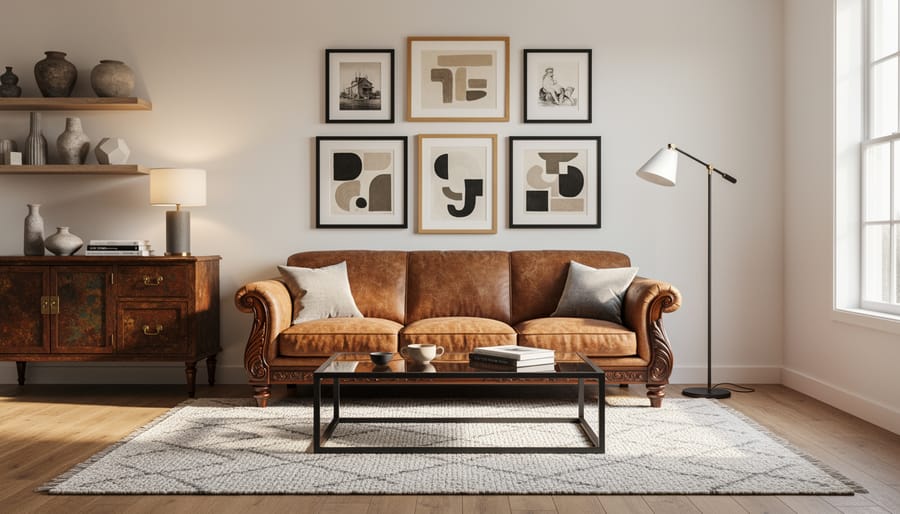
A room filled entirely with brand-new furniture often feels staged, like a showroom waiting for life to happen. The secret to spaces that feel lived-in and authentic is mixing pieces from different eras, your grandmother’s side table beside a sleek modern sofa, a vintage ladder displaying throws next to a contemporary reading chair.
French country homes master this balance naturally. You’ll find an 18th-century armoire storing flat-screen TVs, or a weathered farmhouse table surrounded by upholstered dining chairs from this decade. The blend works because each piece brings something to the conversation: the old offers history and craftsmanship, the new delivers comfort and function.
Start small if you’re nervous about mixing styles. Swap out generic nightstands for refinished wooden crates from a flea market, or place a vintage mirror above a modern console. The trick is contrast with connection, pair smooth with rough, dark with light, ornate with simple. When an antique writing desk sits beside a minimalist floor lamp, each piece makes the other more interesting.
Sourcing vintage doesn’t require deep pockets. Estate sales, online marketplaces, and family attics often yield solid wood furniture for less than flat-pack replicas. A weekend spent lightly sanding and waxing a scratched dresser transforms it into a one-of-a-kind statement piece that tells your story, not a manufacturer’s.
7. Layer Your Lighting for Flexibility and Mood
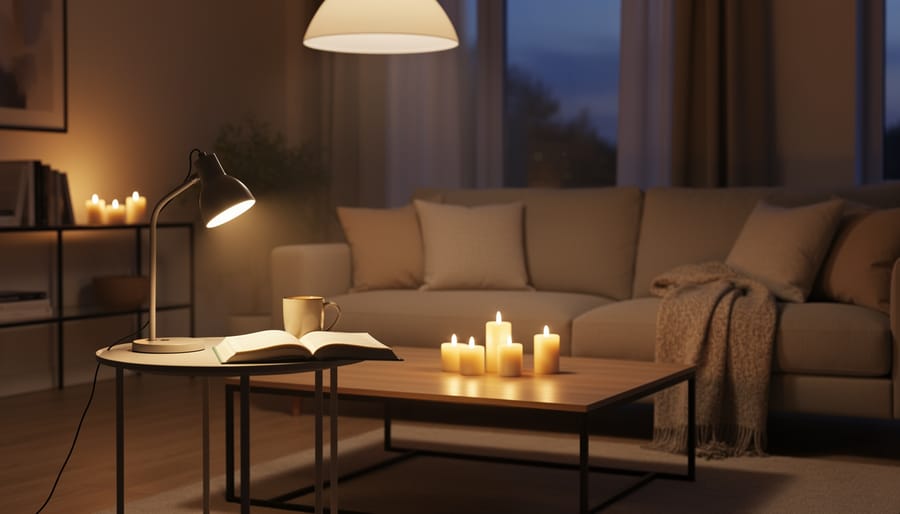
Lighting transforms a room more dramatically than almost any other decorating element, yet it’s often the most overlooked. The secret is layering three types of light: ambient (overall illumination from ceiling fixtures or recessed lights), task (focused light for reading, cooking, or working), and accent (decorative touches like table lamps or candles that create warmth).
In French country homes, this layering feels effortless. A wrought-iron chandelier provides ambient light in the dining room, while a pair of ceramic table lamps on the sideboard adds soft pools of accent light. Candles in mercury glass holders flicker on the mantel, completing the layers. The result is a room that feels inviting at any hour, never harsh or flat.
Start by installing dimmer switches on your overhead lights. This single upgrade lets you adjust brightness for different activities and times of day. Choose bulbs in the 2700K to 3000K range for warm, flattering light that mimics candlelight rather than sterile office fluorescents.
Place lamps at varying heights throughout the room. A tall floor lamp behind a reading chair, table lamps on side tables at different levels, and a low cluster of votives on the coffee table creates visual rhythm and ensures light reaches every corner without glare.
8. Edit Your Decor to Avoid Visual Clutter
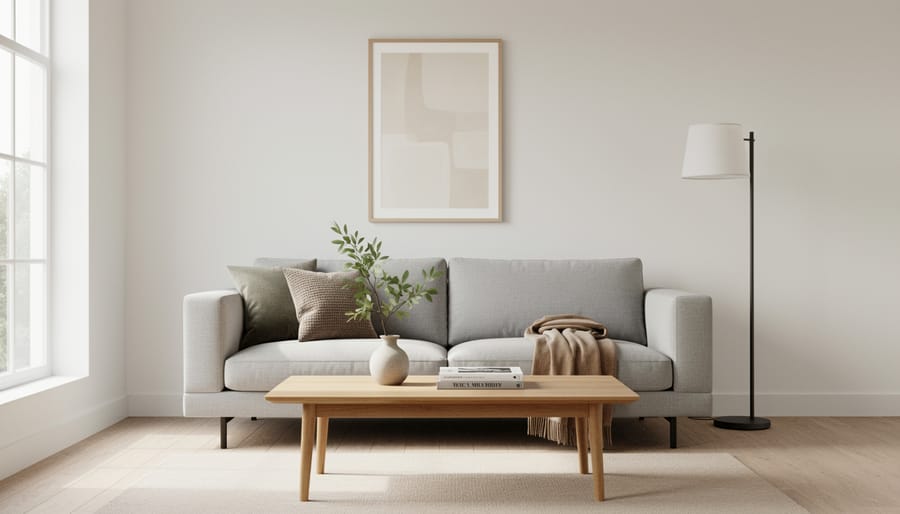
Visual clutter sneaks up slowly. One souvenir from vacation, a gift from a friend, a pretty bowl you couldn’t resist at the market, and suddenly, every shelf groans under the weight of good intentions. French country homes teach us that restraint creates impact. When you display fewer objects, each one gets room to breathe and becomes more beautiful in the process.
The curation mindset shifts decoration from filling space to telling a story. Instead of lining your mantel with ten candlesticks, choose three in varying heights. Rather than covering your coffee table with magazines, coasters, and trinkets, select one beautiful bowl and a small stack of books. This editing reveals the quality and meaning behind what remains.
Try this exercise: Walk through one room and remove half your accessories. Box them up, don’t donate yet. Live with the lighter space for a week. Notice what you actually miss versus what you forget existed. Most homeowners discover they miss almost nothing and love the calmer, more intentional feel.
Quality over quantity isn’t about expensive pieces. It’s about displaying items that matter to you, that work together visually, and that leave enough empty space for your eye to rest. A single vase of fresh lavender on a clear countertop makes more impact than five decorative objects competing for attention.
9. Hang Artwork at Eye Level for Professional Polish
Walking into a friend’s newly decorated dining room last spring, I couldn’t figure out why the space felt off, until I realized her beautiful botanical prints hung so high they seemed to float toward the ceiling, disconnected from the room below. She’d mounted them where they “looked good” from her ladder, but once she came down, the artwork towered above eye level, making the dining table feel oddly separate from the walls. We spent an afternoon re-hanging everything, and the transformation was immediate: the room suddenly felt pulled together, intentional, like a space designed by someone who knew what they were doing.
The rule professionals swear by is deceptively simple: hang artwork so its center sits 57 to 60 inches from the floor. This height mimics the average human eye level in most gallery and museum settings, which means your eye naturally lands on the focal point of the piece without straining up or glancing down. It creates visual harmony, anchoring the artwork to the room rather than letting it drift awkwardly high or slump too low.
When you’re hanging above furniture like a sofa or console, aim for 6 to 8 inches between the top of the furniture and the bottom of the frame. This keeps the piece connected to what’s below it. For high ceilings, resist the urge to push artwork higher just because you have the wall space, stick with the 57-60 inch center guideline, and let your ceilings breathe. Gallery walls follow the same principle: find the center point of the entire arrangement and position that at eye level, then build outward, keeping spacing consistent between frames (2 to 3 inches works well for a cohesive French country look).
10. Add Softness with Textiles and Window Treatments
Textiles are the secret to softening hard surfaces and creating rooms that feel inviting rather than stark. Curtains, throws, and cushions absorb sound, add color, and introduce tactile warmth that balances wood floors, painted walls, and metal fixtures. French country homes embrace natural linen and cotton in creams, soft grays, and muted blues, fabrics that look better with age and develop that lived-in character over time.
Curtain length matters more than most homeowners realize. Hanging panels so they just kiss the floor creates a clean, floating look that works in modern spaces. Letting them puddle an inch or two adds romance and weight, perfect for bedrooms or formal dining rooms. For French country authenticity, choose linen panels in natural tones and hang them high, mount the rod closer to the ceiling to make windows feel taller and more generous.
Layer throws casually over sofa arms and chair backs, not folded into stiff rectangles. A chunky knit throw draped across a linen sofa invites people to curl up and stay awhile. Swap heavier textures in winter for lighter cotton or gauze in summer to keep rooms feeling fresh.
In open-plan homes where kitchen zones meet living areas, textiles help define boundaries, a rug anchors the seating area while cafe curtains or Roman shades soften kitchen windows. If you’re planning updates, explore kitchen island ideas and French country kitchen ideas that blend hard and soft elements seamlessly.
11. Create Zones in Open-Plan Spaces
Open-plan living offers flexibility, but without clear zones it quickly feels chaotic. The key is creating distinct areas that signal their purpose while maintaining visual flow.
Rugs are your most powerful zoning tool. A 5×8 rug under the dining table tells everyone this is where meals happen, while an 8×10 under the sofa and coffee table defines the living area. These don’t need to match perfectly, in French country homes, layering a vintage Persian runner with a neutral jute rug actually enhances the collected, lived-in feel.
Float your furniture away from walls. Pull the sofa three feet into the room, facing the kitchen, and suddenly you’ve created a conversation zone with a natural walkway behind it. This single move transforms a room that feels like a hallway into purposeful spaces.
Bookcases work beautifully as partial dividers. A low, open shelving unit between the living and dining areas provides separation without blocking sightlines or light. Fill it with books, baskets, and pottery that look good from both sides.
My neighbor struggled with a sprawling kitchen-living room until she anchored each zone with its own lighting. A pendant over the island, floor lamp by the reading chair, and chandelier above the table gave each area its own identity. She added coordinating rugs, and suddenly the 600-square-foot space felt intentional instead of overwhelming.
12. Personalize with Meaningful Items, Not Just Decor
The most welcoming rooms aren’t the ones that look like they were staged for a magazine shoot. They’re the ones that tell the story of who lives there. A watercolor your daughter painted in third grade, framed next to a vintage French market poster, carries more warmth than any store-bought art collection ever could.
French country homes understand this instinctively. Walk into a real Provençal kitchen and you’ll see Grandmère’s copper pots hanging above the stove, not because they’re trendy, but because they’ve been making coq au vin for three generations. That worn wooden breadboard isn’t decor; it’s a daily tool that happens to be beautiful.
Start by gathering what already matters to you. Travel souvenirs work when you display one special piece per trip rather than everything you collected. Frame your grandmother’s handwritten recipe cards in simple white frames and group them in the kitchen. Arrange vintage postcards from flea markets in a grid on a hallway wall. Let your children rotate their favorite artwork in matching frames on a gallery ledge that grows with them.
The key is intention. A curated collection of three meaningful ceramic bowls from your travels looks purposeful. Fifteen random trinkets scattered across a shelf just looks cluttered. Choose pieces that spark a memory or make you smile, then give them space to breathe and be noticed.
Your Home, Your Story
Your home isn’t a magazine spread waiting for a photographer. It’s the backdrop to your morning coffee, your family dinners, your quiet evenings curled up with a book. The twelve tips we’ve explored aren’t rules to follow rigidly, they’re tools to help you create spaces that work for your life, not against it.
Start with what you have. Layer in texture, light, and meaning. Make it personal. These three principles will carry you further than any trend or expensive purchase. This week, choose one tip that resonated with you, maybe it’s editing your coffee table, hanging that artwork at the right height, or finally adding the lavender bundle you’ve been meaning to display. Small steps create momentum.
Your home tells your story, and that story is still being written. Give yourself permission to experiment, to make mistakes, to change your mind as your life changes. The imperfect, lived-in beauty of a space that truly reflects who you are will always outshine flawless emptiness. Trust your instincts, start where you are, and enjoy the process of making your house feel like home.
Frequently Asked Questions About Home Decoration
How do I start decorating if I have no experience?
Begin with what you already own: arrange furniture to create conversation areas, edit surfaces to display only your favorite pieces, and add one or two new elements like fresh flowers or throw pillows in colors you love. Start small in one room rather than tackling the whole house, and trust your instincts about what feels comfortable and welcoming.
What’s the biggest mistake beginners make?
Buying everything at once from one store, which creates a showroom look rather than a collected home. Decorating should happen gradually, allowing you to live in your space and discover what you truly need. This approach also prevents costly mistakes and gives you time to find pieces with real character.
How can I decorate on a budget?
Focus on high-impact, low-cost changes like paint, rearranging furniture, and thrifting unique accessories. Invest in a few quality foundational pieces (a good sofa, solid wood table) and fill in with budget finds. Swap out textiles seasonally, shop your own home by moving items between rooms, and watch for estate sales where you can find authentic pieces at a fraction of retail prices.
How do I know if my style is French country or something else?
If you’re drawn to natural materials, soft neutral palettes with gentle accent colors, vintage or antique furniture with a worn patina, and a lived-in elegance rather than formal perfection, French country likely resonates with you. The style embraces imperfection, prioritizes comfort over showiness, and feels warm rather than sleek. If you prefer clean lines, minimal ornamentation, and modern furniture, your style might lean contemporary or Scandinavian instead.
Should I hire a decorator or DIY?
DIY works beautifully when you have time to experiment and enjoy the process of curating your space. Consider hiring help for specific challenges like awkward layouts, large furniture purchases, or when you feel stuck and need fresh perspective. Many decorators offer hourly consultations that give you a roadmap to execute yourself, combining professional insight with the personal satisfaction of doing the work.
These questions reflect what homeowners genuinely wonder when they’re standing in their living room, uncertain where to begin. The answers here align with everything you’ve learned in this article: start with a focal point, layer textures and colors thoughtfully, edit rather than accumulate, and make choices that reflect your real life. Decorating isn’t about having all the answers upfront. It’s about creating a home that welcomes you at the end of every day, and that happens one intentional decision at a time.