
French country kitchen design brings together the rustic charm of Provence with practical, lived-in warmth. The style centers on natural materials, soft weathered finishes, muted color palettes inspired by lavender fields and limestone walls, and an artful mix of vintage and handcrafted elements that feel collected over generations rather than purchased all at once.
What makes this approach so appealing in 2026 is its rejection of sterile minimalism in favor of spaces that invite you to linger over morning coffee or an evening meal with friends. A true French country kitchen doesn’t shout its design credentials. Instead, it whispers stories through worn wooden beams, open shelving displaying everyday pottery, and stone floors that have absorbed decades of footsteps.
The challenge lies in striking the right balance. Too polished, and you’ve created a showroom that belongs in a magazine but nowhere near actual French farmhouse traditions. Too cluttered, and the kitchen loses the calm, unforced elegance that defines the style. Authenticity comes from understanding which elements French homeowners actually use and how they’ve evolved their kitchens to blend beauty with daily function.
This collection of 25 ideas will guide you through each layer of the style, from foundational choices like cabinetry and color to finishing touches that bring personality without pretense. You’ll see how to adapt these concepts whether you’re renovating a full kitchen or refreshing what you already have.
What Makes a Kitchen Truly French Country
French country kitchens aren’t just about hanging copper pots and calling it done. The genuine article emerged from centuries of practical cooking in rural French homes, where beauty grew from necessity rather than decoration. These kitchens were workspaces first, but they carried an inherent grace, weathered surfaces that told stories, natural materials that aged beautifully, and an unpretentious elegance that made people want to linger.
At the heart of authentic French country style lies a reverence for natural materials. Think limestone counters worn smooth by generations of bread-making, terracotta floors that bear the patina of daily life, and solid wood cabinets that improve with age. The French don’t chase perfection; they embrace the character that comes from use. A crack in plaster becomes part of the story. Uneven edges add charm. This approach contradicts the polished uniformity of generic farmhouse trends that borrow surface aesthetics without understanding the underlying philosophy.
Genuine French country style also respects the balance between function and beauty. Everything serves a purpose, but that purpose doesn’t preclude loveliness. Pottery isn’t hidden behind closed doors, it’s arranged on open shelves where morning light catches the glaze. Copper cookware hangs within reach because it’s actually used. Fresh herbs sit in simple ceramic pots on windowsills, ready for cooking but bringing life to the space.
The color palette offers another clear distinction. True French country kitchens draw from nature, soft creams, butter yellows, sage greens, and the warm grays of aged stone. These aren’t bright statement colors but quiet tones that create calm. When you see barn-red cabinets or bold navy in a so-called French country kitchen, you’re looking at American farmhouse style wearing a beret.
25 French Country Kitchen Ideas
Color Palette & Wall Treatments
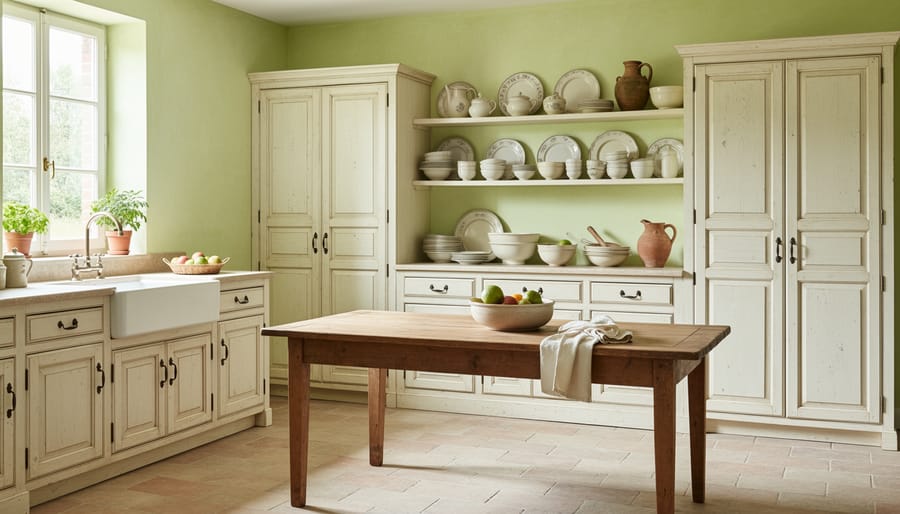
The color palette of a French country kitchen draws directly from the Provençal landscape, wheat fields, lavender, aged limestone, and sun-bleached shutters. These aren’t decorator choices plucked from a trend board; they’re colors French families have lived with for generations because they create calm, welcoming spaces that age beautifully.
Idea 1: Soft Neutrals as Your Foundation
Start with creamy whites and warm beiges on your walls. These aren’t stark whites, think the color of fresh sheep’s milk cheese or aged linen napkins. French country neutrals have subtle yellow or gray undertones that shift with natural light throughout the day. Apply them with a flat or eggshell finish rather than glossy paint; the slight matte quality mimics old plaster and hides minor wall imperfections that add character.
Idea 2: Butter Yellow for Warmth
A pale butter yellow brings instant Provençal sunshine into north-facing kitchens or spaces that lack natural light. The French favor muted, slightly dusty yellows rather than bright primary shades. This color works particularly well on lower cabinets while keeping upper walls neutral, or as an accent on a single wall near your dining area.
Idea 3: Sage Green Cabinets
Soft sage green appears throughout French country homes because it references both olive groves and weathered garden shutters. Use it on lower cabinets or a kitchen island, paired with cream or white upper cabinets. The key is choosing a grayed-down sage rather than a fresh spring green, it should look like it’s been there for decades.
Idea 4: Limewash Wall Treatment
Limewash gives walls the authentic texture of old French farmhouses. Unlike regular paint, this mineral-based coating creates subtle variations and a soft, chalky finish that breathes and ages gracefully. Apply it over existing drywall or plaster in thin, irregular coats with a large brush, leaving some areas slightly translucent. The result is depth and movement that flat paint can’t achieve.
Here are authentic color combinations that work in French country kitchens:
- Cream walls with sage green cabinets and terracotta accents
- Warm white limewash with butter yellow window trim
- Pale gray-beige walls with dove gray cabinetry
- Soft wheat yellow with cream cabinets and natural wood tones
- Aged white with touches of faded blue in textiles and accessories
Idea 5: Exposed Stone or Brick Accent Wall
If your kitchen has existing brick or stone underneath drywall, expose it. If not, consider adding a stone veneer or reclaimed brick to one wall, typically behind the range or along a breakfast nook. Leave the stone natural or apply a light whitewash that lets the texture show through. This grounds the space and provides the kind of aged architectural detail that defines French country interiors. The rough texture contrasts beautifully with smooth painted surfaces and creates a focal point that feels collected rather than designed.
Cabinetry & Storage Solutions
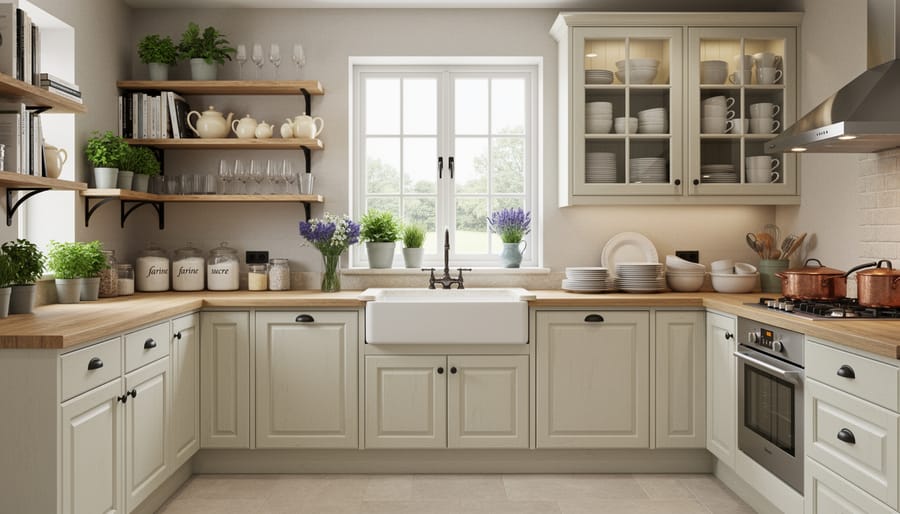
Open shelving transforms your kitchen into a curated display of everyday beauty, a hallmark of French country design. Rather than hiding dishes behind closed doors, arrange cream-colored ironstone, earthenware serving pieces, and vintage café au lait bowls on sturdy wood or wrought iron brackets. Stack plates by size, intersperse them with small potted herbs, and resist the urge to make it look too perfect, the French aesthetic embraces a lived-in arrangement where frequently used items sit within easy reach.
Distressed painted cabinets capture the weathered elegance of a centuries-old French farmhouse without requiring actual antiques. Choose soft whites, pale grays, or muted sage greens, then gently sand edges and corners where natural wear would occur over decades of use. This technique works particularly well on inset cabinet doors with beadboard or raised panel details. The key is subtlety: you want cabinets that look aged by time, not deliberately roughed up. Many authentic French country kitchens feature mismatched cabinet finishes, where base cabinets might be painted while uppers remain natural wood or vice versa.
Glass-front armoires bring furniture-like charm to kitchen storage while showcasing your prettiest serving pieces. These tall cabinets, often featuring mullioned glass doors with delicate frames, feel more like borrowed dining room pieces than built-in storage. Place one along a free wall to hold glassware, linens, or your collection of vintage French stoneware. The transparency keeps the space from feeling heavy while adding vertical interest.
Freestanding hutches anchor French country kitchens with their blend of open and closed storage. A traditional hutch displays dishes on upper shelves while providing drawers and cabinets below for less photogenic necessities. Look for pieces with carved details, curved aprons, or decorative corbels. Pine, oak, or fruitwood finishes all work beautifully, especially when the wood shows honest signs of age.
Vintage-style pantry doors with chicken wire or decorative metal inserts add continental character while maintaining airflow around dry goods. These doors, often painted in soft colors and fitted with iron hardware, reference traditional French larders where ventilation preserved food naturally.
Countertops & Surfaces
French provincial kitchens have always favored natural materials that develop character with use, and your choice of countertops and backsplashes sets the foundation for this timeless aesthetic.
11. Natural Stone Countertops
Limestone and soapstone are the go-to choices in authentic French country homes. These softer stones patina beautifully over time, developing subtle variations that tell the story of countless family meals. Unlike polished granite, which can feel too modern and cold, honed limestone in warm beige or gray tones creates the gentle, lived-in surface that defines French kitchens. Soapstone offers similar warmth with natural veining that darkens as it ages. Both stones require periodic sealing but reward you with surfaces that only grow more beautiful with daily use.
12. Butcher Block Islands
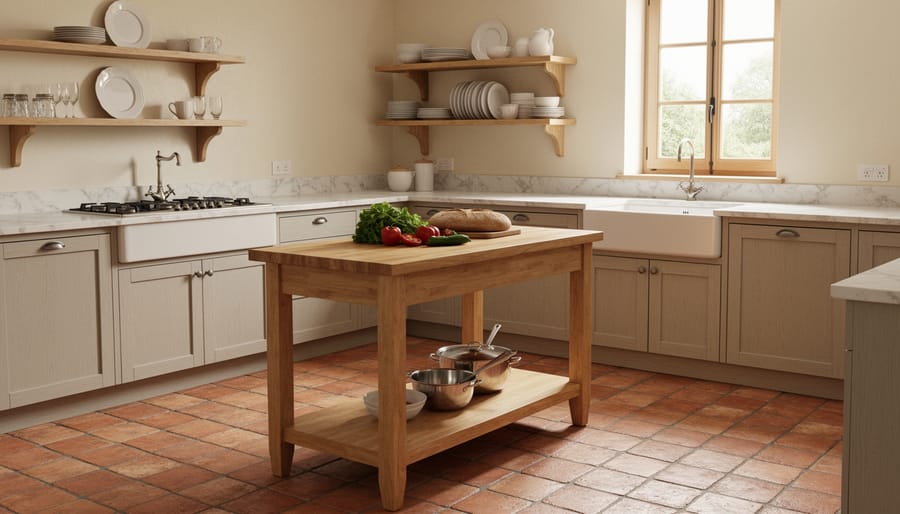
A thick butcher block island serves as both workhorse and focal point. French country kitchens treat the island as a true work surface where bread is kneaded and vegetables are chopped, not just a decorative element. Choose substantial wood like walnut or oak in natural tones rather than stained finishes. The wood will develop knife marks and gentle discoloration, creating the authentic patina that new homeowners often try to replicate artificially.
13. Marble Pastry Surfaces
A dedicated marble slab built into your counter or island honors the French baking tradition. The naturally cool stone keeps butter firm and dough manageable. Even a two-foot square section transforms your kitchen into a genuine baking station. French kitchens often feature marble in soft whites or creams with subtle gray veining.
14. Terra Cotta Tile Backsplashes
Small-format terra cotta tiles in warm oranges and russets create backsplashes with rustic texture. Unlike uniform subway tiles, handmade terra cotta shows natural color variation within each tile. The unglazed surface develops a subtle sheen from cooking oils over time.
Lighting & Fixtures
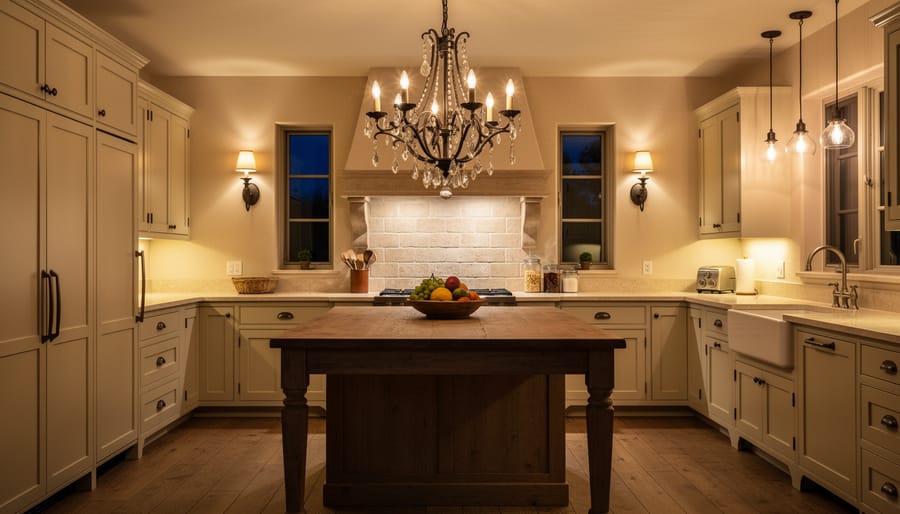
Lighting in a French country kitchen should feel warm and welcoming, never harsh or overly modern. The French have mastered the art of layered illumination that makes a kitchen feel like the heart of the home at any hour.
15. Wrought Iron Chandeliers
A wrought iron chandelier suspended over your kitchen table or island instantly anchors the space with rustic elegance. Look for pieces with hand-forged details and a slightly weathered finish rather than polished black metal. The French favor chandeliers that feel substantial without being overly ornate, often featuring simple scrollwork or candle-style arms that cast a soft, diffused glow.
16. Copper Pendant Lights
Copper pendants bring warmth and a touch of gleam without the coldness of stainless steel. Hang them in a series of three over an island, or choose a single larger pendant over a sink. The metal develops a natural patina over time, which adds to the authentic lived-in character French country kitchens prize.
17. Wall Sconces with Fabric Shades
French kitchens often incorporate wall sconces that would look equally at home in a living room. Choose fixtures with linen or cotton shades in cream or soft white, mounted on brass or iron brackets. These provide gentle task lighting near prep areas while softening the overall ambiance.
18. Natural Light Through Window Treatments
The French maximize natural light with simple window treatments that frame rather than block. White linen café curtains or light cotton panels on wrought iron rods let sunshine flood in while maintaining privacy. Avoid heavy drapes or modern blinds that interrupt the connection between your kitchen and the outdoors.
Decorative Touches & Accessories
19. Toile Fabrics for Timeless French Character
Classic toile de Jouy patterns bring instant French country authenticity through tea towels, cafe curtains, or cushion covers in traditional blue-and-cream or red-and-cream colorways. These pastoral scene prints originated in 18th century French textile mills and remain a hallmark of the style. Hang a toile curtain on a tension rod inside glass cabinet doors to soften the look of everyday dishes, or drape a length across open shelving as a charming backdrop for displayed pottery.
20. Collections of Ceramic Pitchers and Bowls
French country kitchens celebrate the beauty of utilitarian pottery, with stoneware pitchers, earthenware bowls, and ceramic crocks grouped on open shelves or countertops. Look for pieces in cream, ochre, or soft blue glazes, the slightly irregular shapes and hand-thrown quality matter more than perfect matching. Use large pitchers to hold wooden spoons and spatulas near the stove, and nest graduated bowls on a shelf to create visual interest while keeping them within easy reach.
21. Copper Cookware as Living Decor
Gleaming copper pots and pans aren’t just decorative, they’re working tools that French cooks have valued for centuries for their superior heat conduction. Hang a collection from a pot rack above your island or mount individual pieces on wall hooks to create a warm, amber glow that catches natural light throughout the day. Even a few copper pieces mixed with stainless steel instantly elevate the authenticity of your French country kitchen.
22. Fresh Lavender and Herb Displays
Bundles of dried lavender hung from a cabinet pull or arranged in a vintage tin bring the fragrance and visual softness of Provence directly into your kitchen. Keep fresh herbs like rosemary, thyme, and basil in terra cotta pots on the windowsill or countertop where they’re both beautiful and immediately accessible for cooking. The French country aesthetic prizes functional beauty, and nothing embodies this better than ingredients that serve your cooking while adding natural texture to the space.
23. Vintage Market Baskets
Wire egg baskets, woven willow shopping baskets, and handled produce baskets introduce organic texture while providing practical storage for everything from onions to dish towels. Hang a collection of different-sized baskets on wall hooks, tuck one under the sink for cleaning supplies, or use a large shallow basket as a fruit bowl on the counter. The slightly worn patina of authentic French market baskets tells a story of daily use across generations.
24. Exposed Rustic Wood Beams
If your kitchen has ceiling beams, leave them natural or finish them in weathered wood tones rather than painting them to match the ceiling. These architectural elements ground the space with organic warmth and create the sense of an old French farmhouse kitchen. Where existing beams aren’t present, consider adding reclaimed wood beams as a design feature, even faux beams in realistic finishes can provide the rustic overhead element that anchors French country decor.
25. Antique French Advertising Signs
Vintage metal signs advertising French products like olive oil, wine, or chocolate add authentic character and a touch of whimsy to kitchen walls. These enamel plaques, often found at flea markets, bring genuine French graphics and typography into your space. Mount one above a doorway, lean a collection against the backsplash on open shelving, or hang a single statement piece as affordable artwork that reinforces the French provenance of your kitchen’s design story.
Flooring & Finishing Details
The foundation beneath your feet sets the stage for everything above it. French country kitchens traditionally feature flooring materials that balance beauty with the practical demands of a hard-working space.
Wide-Plank Wood Floors
Authentic French country homes favor wood planks that are noticeably wider than standard flooring, often 6 to 12 inches across. This creates a sense of age and rustic elegance that narrow strips simply can’t match. Oak and chestnut are traditional choices, typically finished with a matte or hand-scraped surface rather than high-gloss treatments. The wider boards show more of the wood’s natural grain and character, including knots and color variations that add to the lived-in feel. If you’re installing new floors, consider a wire-brushed finish that enhances texture without looking artificially distressed.
Terracotta Tiles
Clay tiles in warm, earthy tones bring an unmistakable Mediterranean character to French country kitchens. Genuine terracotta develops a natural patina over time, deepening in color and acquiring subtle variations that make each floor unique. The tiles’ slightly irregular surfaces and hand-crafted edges contribute to the authentic aesthetic. Their natural coolness makes them particularly practical in warmer climates or for kitchens that generate lots of cooking heat. Seal terracotta properly to protect against stains while maintaining its matte, natural appearance.
Limestone Flooring
Soft gray or beige limestone offers timeless elegance with remarkable durability. French limestone tiles, particularly those from regions like Burgundy, feature subtle fossil patterns and color variations that create visual interest without overwhelming the space. The stone’s natural texture provides slip resistance while its neutral tones complement virtually any color palette you’ve chosen for walls and cabinetry above.
Bringing It All Together
Creating an authentic French country kitchen doesn’t mean incorporating all 25 ideas at once. The beauty of this style lies in its layered, collected-over-time quality, which means you can start with what speaks to you most and build gradually. Think about your kitchen’s bones, the size, layout, and existing features, then choose ideas that complement rather than fight against those realities.
For smaller kitchens, focus on color, lighting, and carefully chosen accessories rather than large furniture pieces. A sage green wall color, copper pendant lights, and open shelving displaying beautiful pottery can transform a compact space without overwhelming it. Larger kitchens have room for statement pieces like a freestanding hutch or farmhouse table, plus the architectural elements such as exposed beams or stone accent walls that anchor the French country look.
Budget considerations matter, but authentic French style has always celebrated resourcefulness. You don’t need to renovate everything. Start with these priorities for maximum impact at any price point:
- Paint existing cabinets in soft neutrals instead of replacing them entirely
- Add open shelving to display vintage finds from flea markets and brocantes
- Update lighting with wrought iron or copper fixtures that set the tone
- Incorporate natural textures through linen curtains, wooden cutting boards, and ceramic containers
- Display everyday items like copper pots, pottery, and fresh herbs as both functional and decorative elements
The key is curating elements that genuinely appeal to you rather than checking boxes on a French country style list. Your kitchen should feel personal and lived-in, not staged. Choose pieces that you’ll actually use and love, that French enamelware pitcher holding wooden spoons, those vintage market baskets for onions and garlic, the ceramic bowls you reach for every morning. This approach creates the authentic warmth that defines French country kitchens, where beauty and function exist in comfortable harmony.
Common Questions About French Country Kitchens
What’s the most budget-friendly way to start a French country kitchen?
Begin with paint, soft neutrals or butter yellows on walls and cabinets create instant transformation for under $200. Add open shelving to display secondhand French pottery and vintage baskets from flea markets, which cost far less than new cabinetry while delivering authentic charm.
Can I mix French country style with modern appliances?
Absolutely. French country kitchens have always balanced beauty with practicality, so modern appliances fit naturally as long as you soften their presence with surrounding rustic elements. Panel your dishwasher to match cabinetry, display copper cookware near stainless steel ranges, or add a vintage hutch beside contemporary refrigeration.
How do I know if something is authentically French country or just generic farmhouse?
Authentic French country leans elegant rather than rough-hewn, favoring soft colors over stark whites, natural worn finishes over distressed black paint, and curated displays over cluttered collections. If it feels like a staged rustic barn, it’s likely American farmhouse; if it suggests a lived-in Provençal home with layers of history, you’re capturing genuine French country spirit.
Do I need to commit to the style throughout my entire kitchen?
Not at all. French country style works beautifully in layers, you might start with lighting and textiles, then gradually add cabinetry changes or surface treatments as budget allows. Many successful French country kitchens blend elements with existing styles, creating personal spaces that feel collected over time rather than installed all at once.
The beauty of French country design lies in its forgiving nature. This style emerged from real homes where families cooked daily, gathered around tables, and lived fully in their spaces. That means your French country kitchen doesn’t need museum-perfect symmetry or designer price tags. A chipped enamel pitcher filled with wooden spoons tells a better story than flawless matching accessories. Focus on natural materials, warm colors, and pieces that genuinely appeal to you rather than chasing an idealized Pinterest image. The most authentic French country kitchens reflect their owners’ personalities and cooking habits, embracing the perfectly imperfect character that makes these spaces feel like home.
You don’t need to implement all 25 ideas at once. Start with one or two elements that speak to you, maybe a butter yellow accent wall or a collection of vintage pottery on open shelves. French country style isn’t about perfection; it’s about creating a space that feels warm, personal, and genuinely lived-in. Trust your instincts, embrace the beauty of imperfection, and let your kitchen tell its own story over time.


